
SIMGOT SuperMix 5 Review – The Mature Evolution
The new Simgot SuperMix 5 represents a highly technical shift, housing an ambitious five-driver array that includes a bone conduction driver, a dynamic driver, two balanced armatures, and a micro-planar magnetic driver.
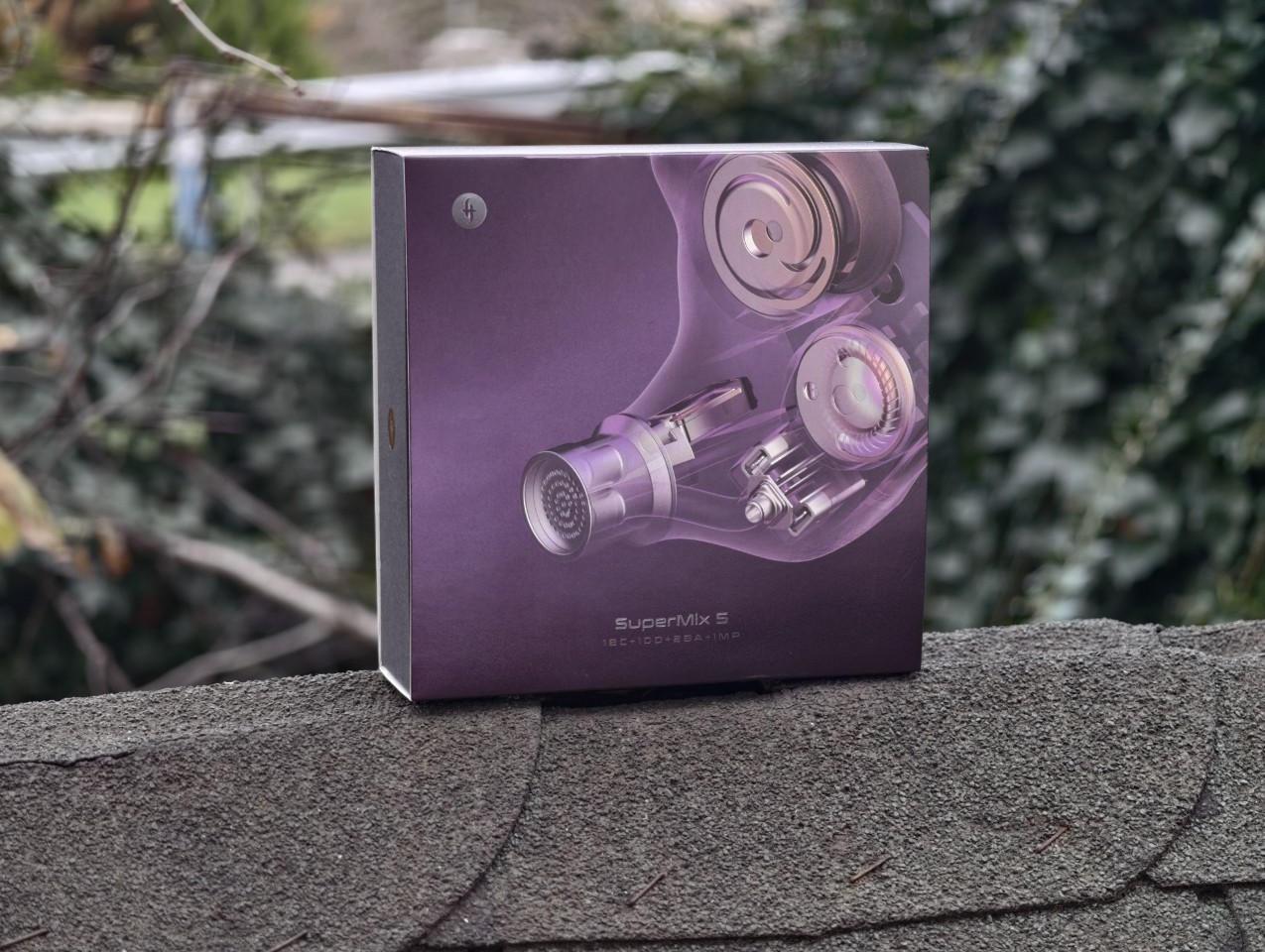
The SuperMix 5 targets a mature, Harman-neutral profile that prioritizes organic timbre and tactile immersion. By utilizing high-precision 3D printing and a sophisticated four-way crossover, Simgot has attempted to create a cohesive listening experience that bridges the gap between traditional air-conduction and the visceral sensation of bone-conduction technology.
Build, Materials, and Aesthetic
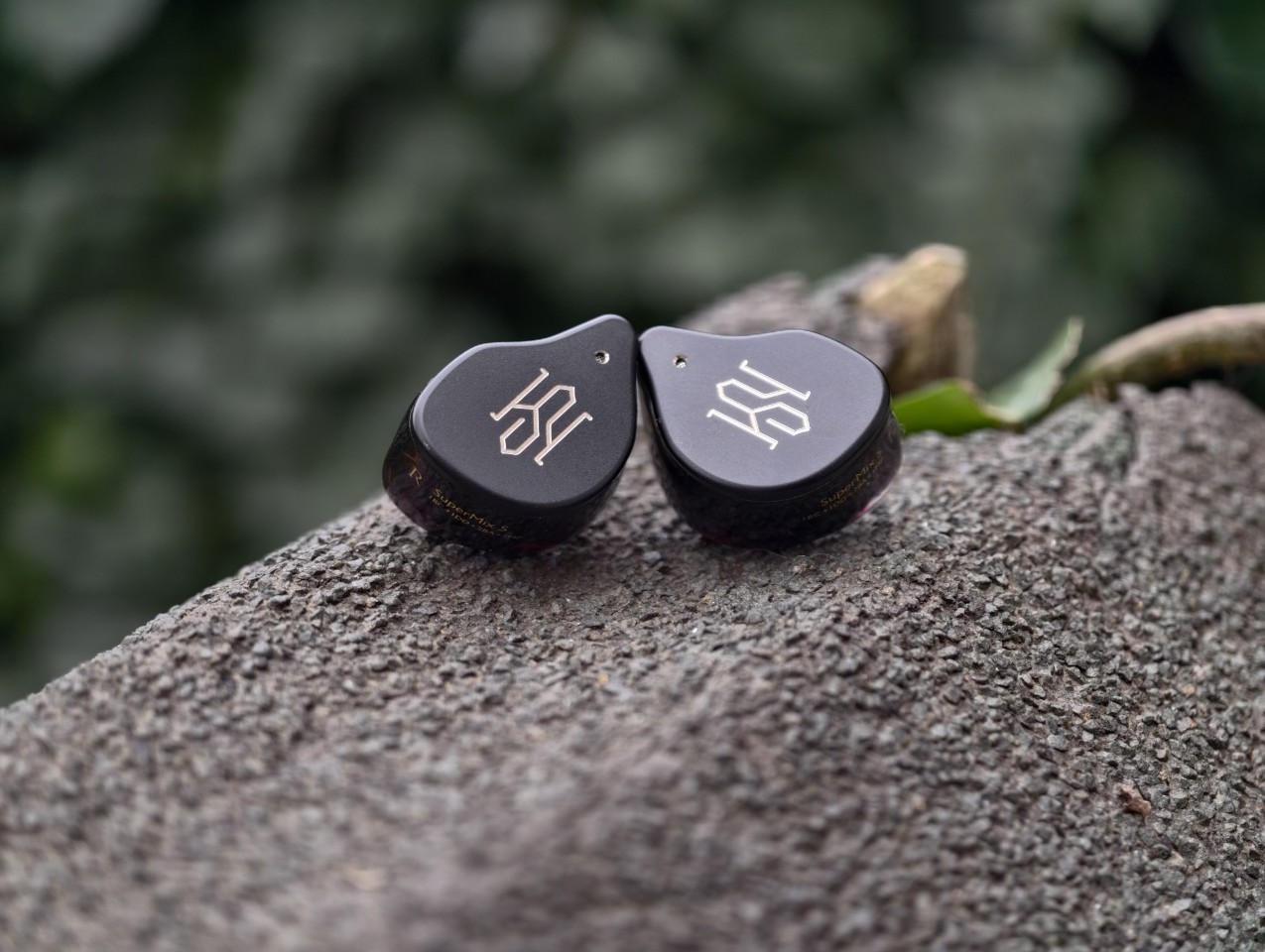
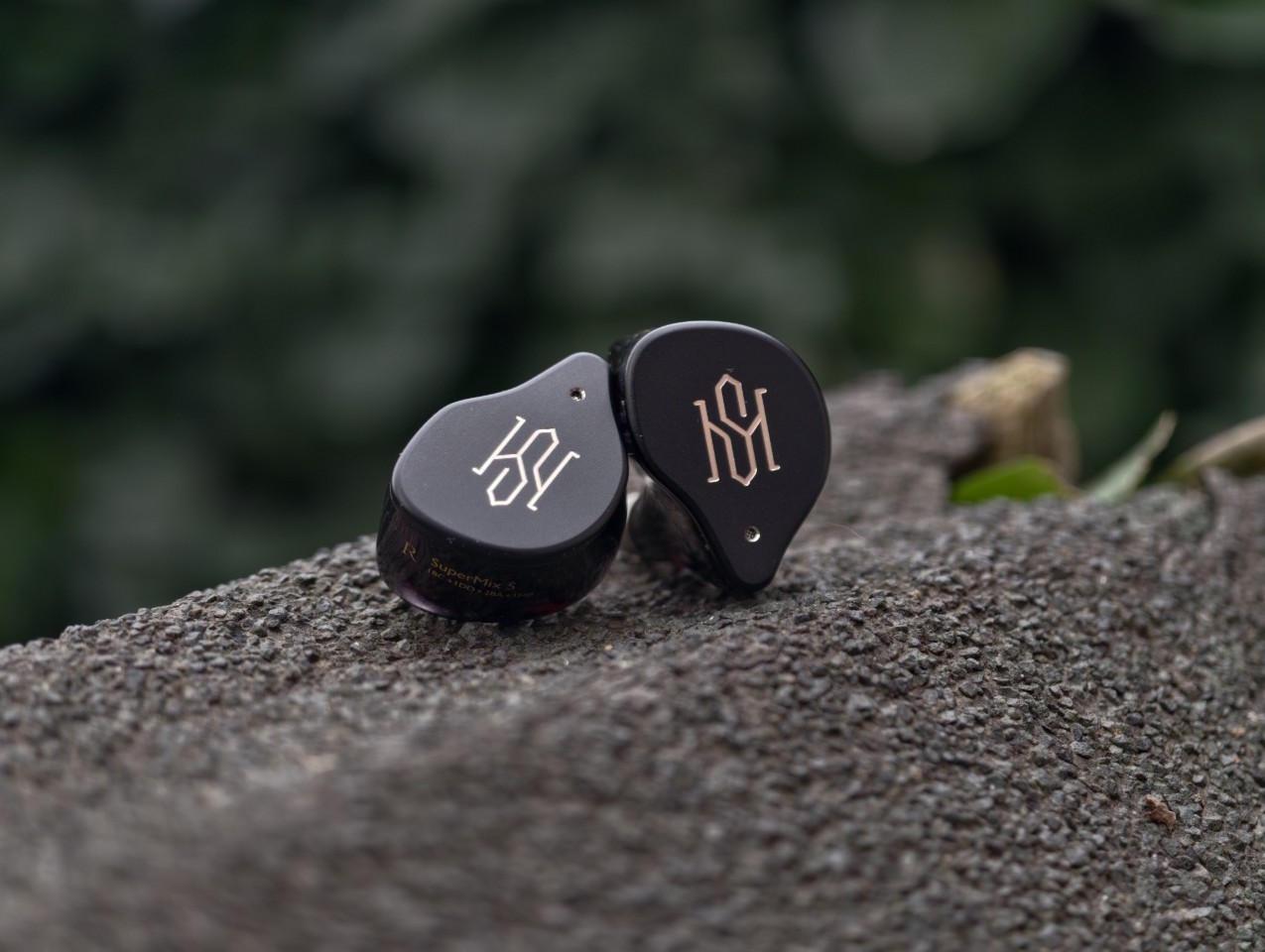
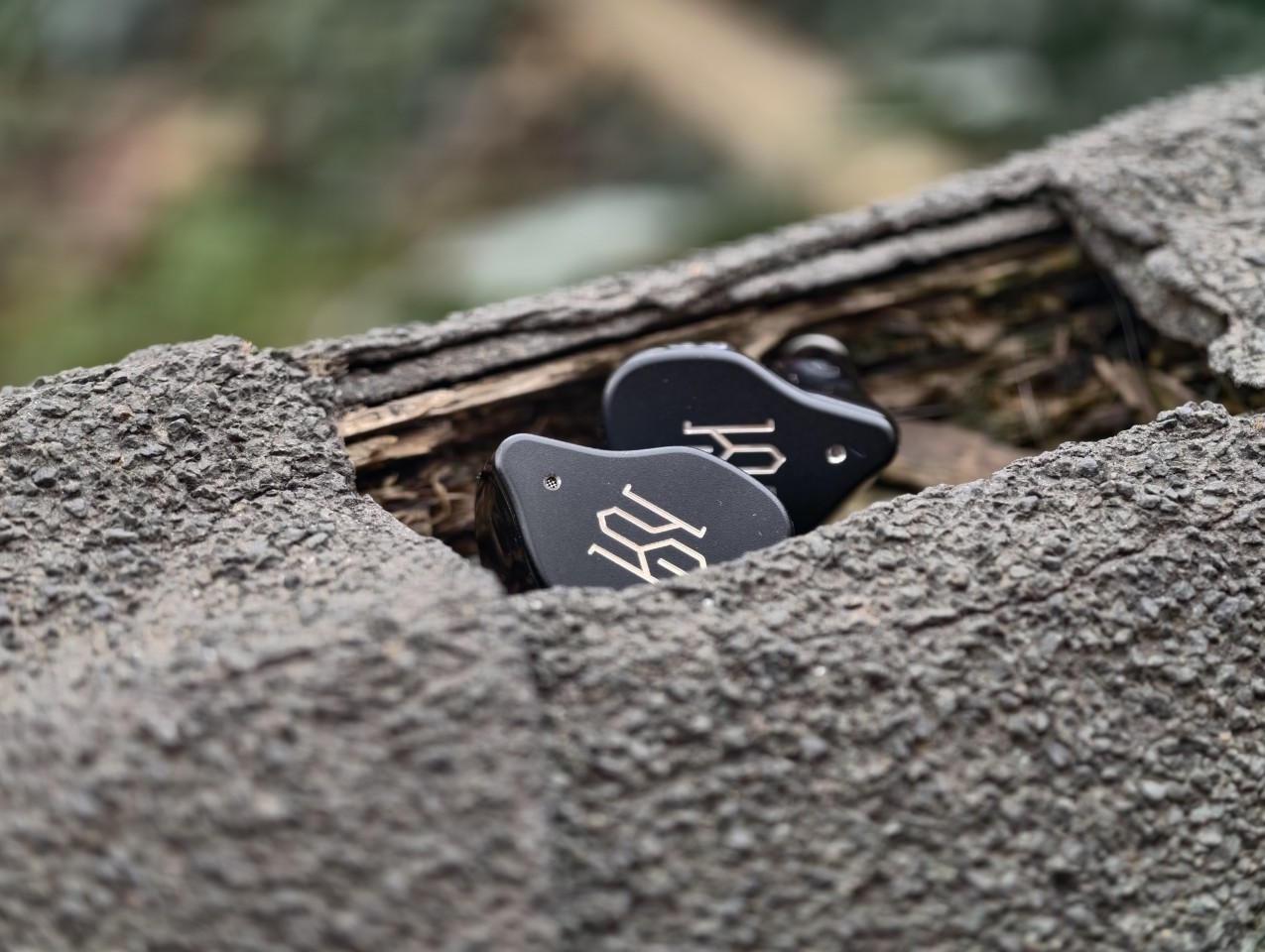
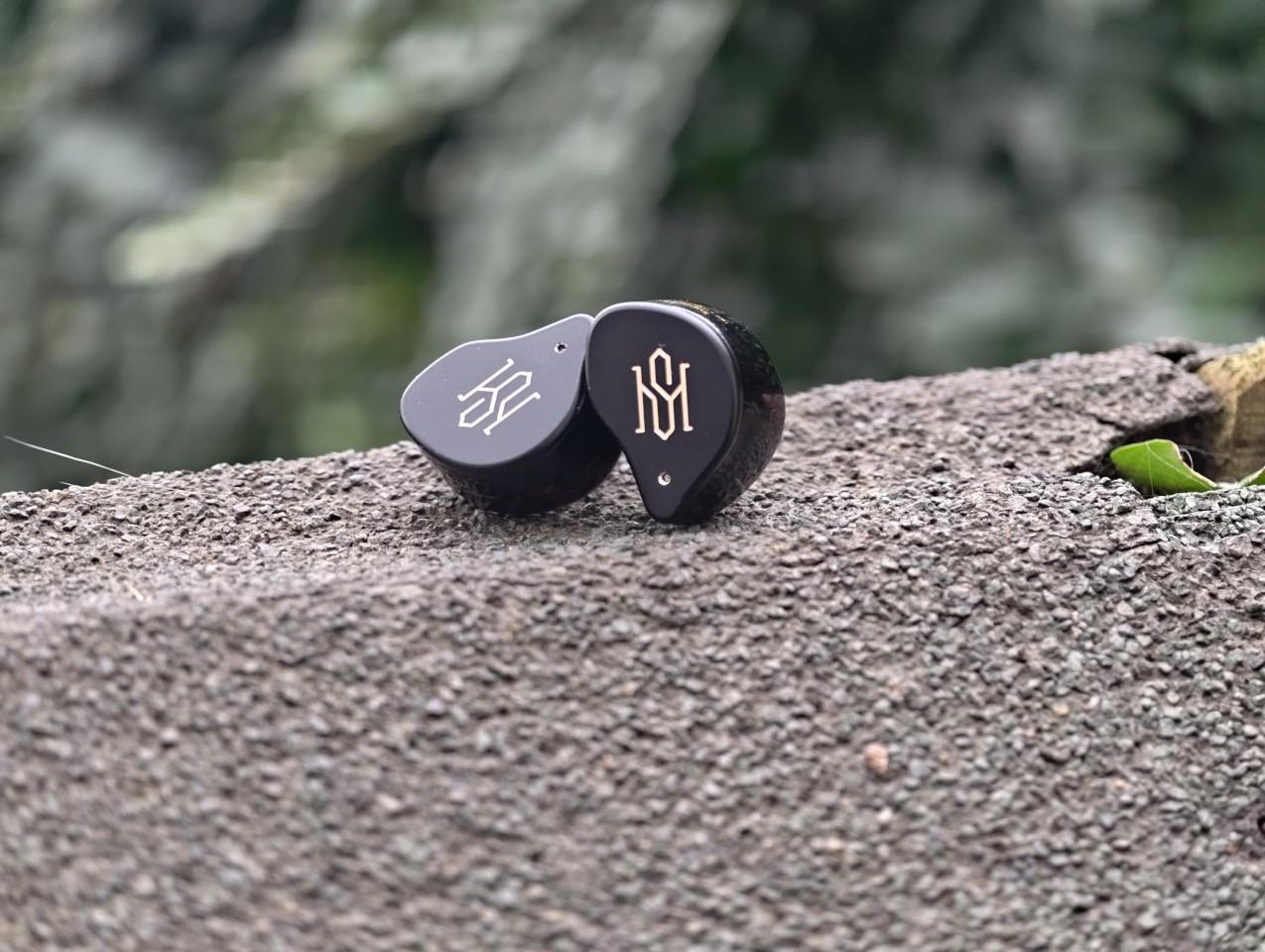
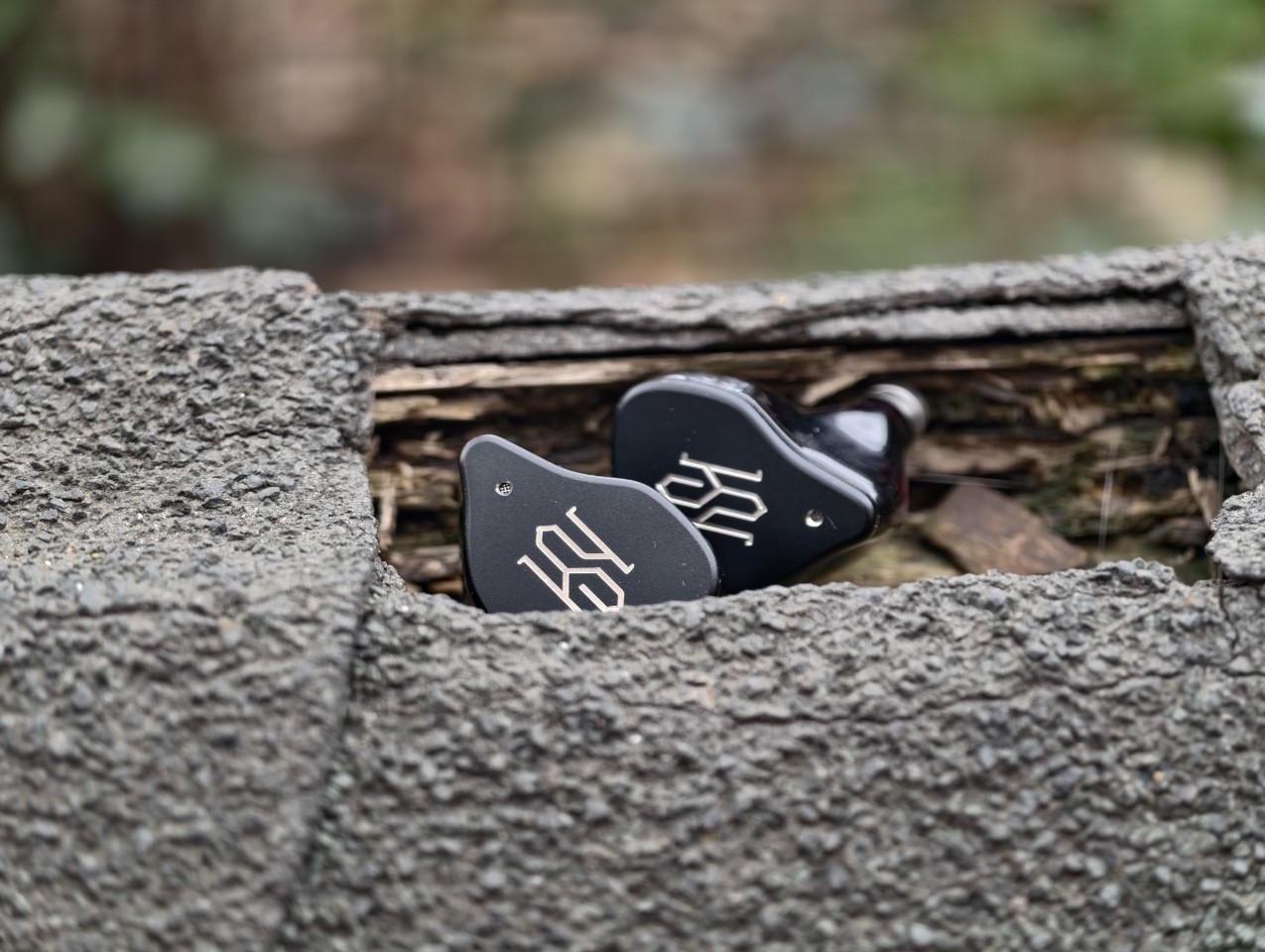
The physical construction of the SuperMix 5 is an exercise in functional minimalism. The shells are manufactured using high-precision resin 3D printing, resulting in a deep, translucent black finish that is only truly revealed under direct light. This is paired with a CNC-machined metal faceplate that features a subtle satin texture and a clean, circular logo design.
The choice of medical-grade resin ensures a hypoallergenic and lightweight experience, while the metal alloy backplate provides structural rigidity and a premium feel. Internally, the design is even more complex; each driver is fitted with an independent, 3D-printed acoustic filter duct designed to prevent frequency interference before the sound reaches the nozzle.
Ergonomically, the SuperMix 5 is slightly larger than the average IEM to accommodate its five-driver matrix, yet its anatomical shape is refined to sit securely within the concha of the ear. The nozzle is constructed from metal and features a prominent lip to keep eartips secure.
This attention to detail extends to the ventilation system, with a single, precisely placed vent on the faceplate to manage pressure and prevent driver flex. The overall aesthetic is sober and professional, moving away from the “jewel-like” aesthetics of earlier models toward something that feels more like a precision tool.
What’s in the Box
Simgot has provided a comprehensive accessory package that reflects the IEM’s mid-tier flagship status. The unboxing experience is organized and premium, ensuring the user has everything needed for various source connections.
- One pair of Simgot SuperMix 5 In-Ear Monitors.
- One high-purity Litz-structured silver-plated single-crystal copper cable.
- One interchangeable 3.5mm single-ended termination plug.
- One interchangeable 4.4mm balanced termination plug.
- Six pairs of silicone eartips in two distinct styles (wide-bore and narrow-bore).
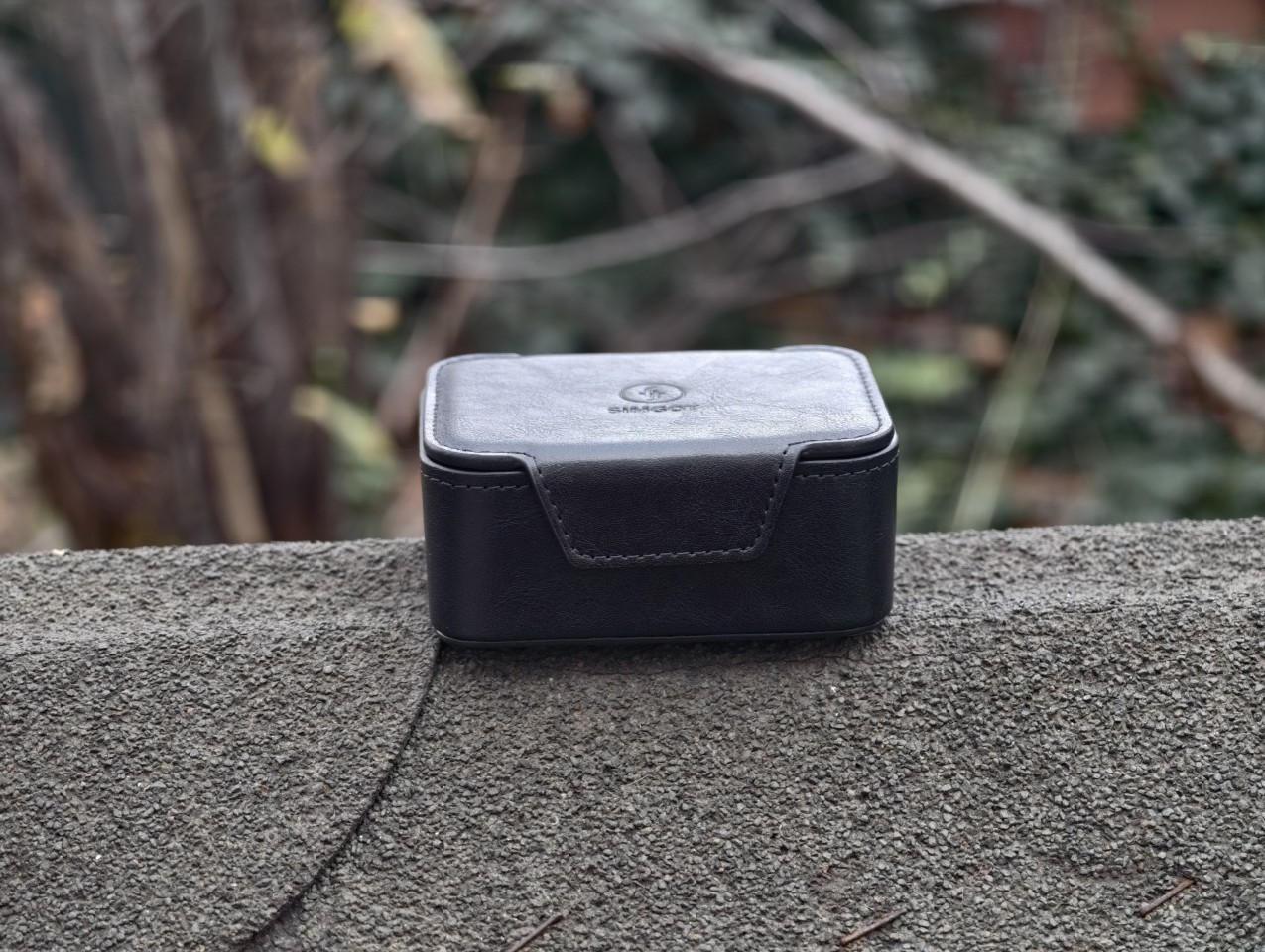
- One premium black faux-leather carrying case with a magnetic closure.
- One warranty card and a detailed user manual.
Specs
- Driver Configuration: 1x Bone Conduction (BC) + 1x Dynamic Driver (DD) + 2x Balanced Armature (BA) + 1x Micro Planar Driver.
- Frequency Response: 8Hz – 40kHz.
- Effective Frequency Response: 20Hz – 20kHz.
- Impedance: 19Ω ±15% (at 1kHz).
- Sensitivity: 120dB/Vrms (at 1kHz).
- Crossover: Four-way RC crossover circuit with independent 3D-printed filter ducts.
- Connector Type: Standard 0.78mm 2-pin.
- Cable Material: Litz High-Purity Silver-Plated Single-Crystal Copper.
- Termination: Modular 3.5mm and 4.4mm interchangeable plugs.
- Price: $219.99
Disclaimer: The SIMGOT SuperMix 5 was kindly provided by Linsoul for review.
Sound
Lows: Tactile and Physical
The low-frequency performance of the SuperMix 5 is the product of a unique synergy between an 8mm DLC (Diamond-Like Carbon) flexible surround dynamic driver and a 10mm custom coil bone conduction driver. In most IEMs, bass is purely air-conducted, but here, the bone conduction driver translates electrical signals into physical vibrations transmitted through the skull to the inner ear. This results in a bass signature that is exceptionally tactile; you don’t just hear the kick drum, you feel a subtle, resonant “thump” that mimics the sensation of standing in front of a high-quality subwoofer.
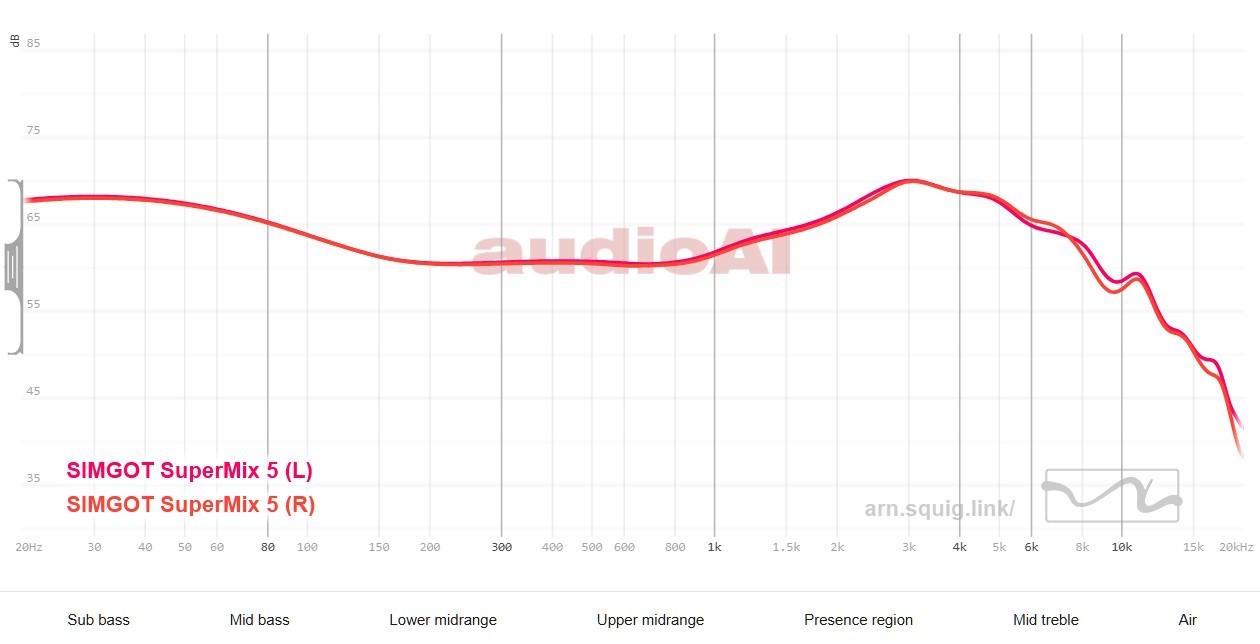
Tuning-wise, the bass follows a Harman-neutral curve, providing a healthy sub-bass boost that maintains a clean, separated mid-bass. Because the bone conduction driver operates from 200Hz upward, it fills in the “gaps” often found in hybrid setups, adding a sense of density and speed to bass lines.
The decay is natural yet quick, avoiding the “one-note” boominess that can plague lesser dynamic drivers. It is a nuanced low-end that prioritizes texture and “feel” over sheer volume, making it highly effective for genres like electronic, hip-hop, and cinematic soundtracks where sub-bass rumble is essential.
Mids: Lush and Organic
The midrange is managed by two large-volume balanced armatures, but its character is heavily influenced by the bone conduction driver’s wide operational range (200Hz to 7kHz). This crossover overlap allows the BC driver to compensate for the “thinness” sometimes associated with balanced armatures.
The result is a midrange that feels organic and full-bodied. Male vocals have a grounded, realistic weight that avoids sounding recessed, while female vocals are delivered with clarity and intimacy due to a precisely tuned pinna peak that highlights their presence without becoming “shouty.”
There is a distinct “lushness” to the mids that provides an emotional connection to the music. The phase alignment—enabled by the independent 3D-printed ducts—ensures that the transition from the bass to the midrange is seamless. Unlike many hybrids that feel like they have “disconnected” sections of sound, the SuperMix 5 maintains a unified front.

It handles complex orchestral pieces and vocal harmonies with impressive layering, allowing the listener to perceive individual instruments within a dark and stable background. It is a “musical” midrange rather than a strictly clinical one, favoring timbre and texture over artificial sharpening.
Treble: Polite and Refined
For the high frequencies, Simgot utilizes a micro-planar magnetic driver alongside the balanced armatures. This is a departure from the piezoelectric (PZT) drivers used in previous iterations, aiming for a smoother and more refined extension.
The treble is “polite” by Simgot’s standards; it provides enough detail to capture the micro-nuances of a recording—such as the shimmer of a cymbal or the breath of a singer—but it intentionally avoids the sharp peaks that can cause listener fatigue. It follows a natural roll-off that makes it very safe for those who are sensitive to sibilance or high-frequency “glare.”
While some “treble-heads” might miss the extreme air and sparkle found in the SuperMix 4, the SuperMix 5’s treble is far more versatile for long-term listening. The micro-planar driver provides excellent speed and precision, ensuring that transients are crisp and well-defined without the metallic “zing” that often accompanies budget planar implementations.
It is a mature, high-resolution treble that focuses on accuracy and refinement, acting as a clear, non-distracting window into the music’s higher registers.
Technicalities: Depth and Cohesion
Technically, the SuperMix 5 punches well above its weight class, particularly in imaging and spatial layering. The inclusion of bone conduction adds a “holographic” quality to the soundstage. Because the vibrations offer a physical sensation of sound, the brain perceives a greater sense of depth and 3D space than with standard air-conduction IEMs alone.
The soundstage is moderately wide but exceptionally deep, allowing for precise instrument placement where you can almost point to the location of the performers in the virtual space.
The four-way RC crossover is the unsung hero here, managing five different drivers with zero audible phase issues. This results in a level of cohesion that is rare for a quadbrid design. The background is remarkably dark and clean, free from the electronic “hiss” or distortion that can sometimes occur in high-sensitivity multi-driver units.
Whether used for critical music listening or high-stakes competitive gaming, the technical performance is stable and reliable, providing a high level of transparency and detail retrieval without ever feeling forced or artificial.
vs SuperMix4
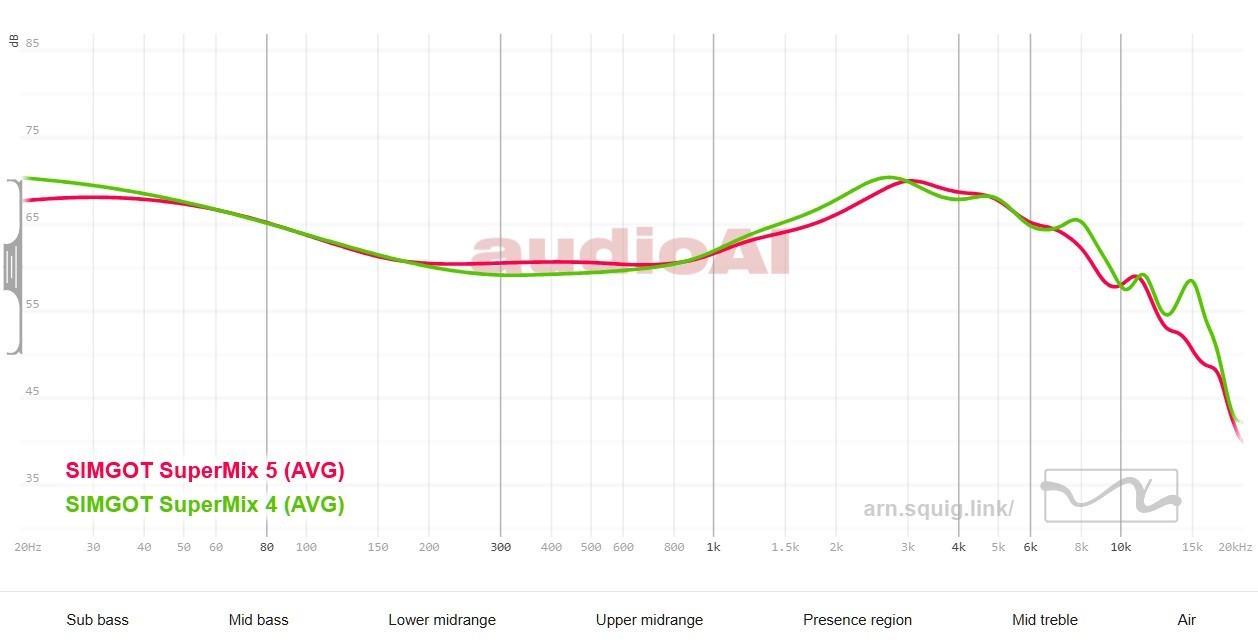
The Simgot SuperMix 4 and SuperMix 5 represent two distinct tuning philosophies, with the SuperMix 4 favoring a leaner, more “analytical-bright” signature and the SuperMix 5 moving toward a “holographic-organic” presentation. Looking at the lows, the SuperMix 4 provides a clean, sub-bass-focused punch, whereas the SuperMix 5 adds more tactile “meat” and vibration to the lower frequencies through its bone conduction driver, filling in the lower-midrange gaps that sound thinner on the 4.
The midrange on the SuperMix 4 is more recessed and clinical, while the SuperMix 5 offers a lusher, more natural vocal presence that feels more cohesive. In the treble, the SuperMix 4 is noticeably sparklier and more aggressive due to its piezoelectric driver, whereas the SuperMix 5 smoothens out those sharp peaks for a refined, fatigue-free high-end.

Technically, the SuperMix 4 excels at a wide, traditional stage, but the SuperMix 5 provides superior imaging depth and a “3D” sense of space, making it the more mature and immersive performer of the two.
Conclusion: The Mature Evolution
The Simgot SuperMix 5 is a technical triumph that marks a new direction for the brand. By moving toward a more natural, reference-like tuning and incorporating bone conduction for physical tactility, Simgot has created an IEM that is both technologically advanced and musically satisfying. It is built for the listener who wants to experience the benefits of a complex five-driver array—textured bass, lush mids, and refined treble—within a cohesive and comfortable package.
While it sacrifices the aggressive “fun” factor of previous models, it gains a level of organic realism and long-term listenability that makes it one of the most compelling “daily driver” options in the current mid-tier market. It is a sophisticated, well-engineered tool for those who value the intersection of physical sensation and high-fidelity sound.