
HIBY DIGITAL M500 DAP Review – Hatsune Miku Edition – The Harmony of Tech and Lifestyle
In the rapidly evolving landscape of portable audio, the boundary between a dedicated Digital Audio Player (DAP) and a smartphone has often been a contentious one. For years, audiophiles carried “stacks”—bulky sandwiches of phones and external DAC/Amps—to achieve high-fidelity sound. Then came the standalone DAP, which offered great sound but often lagged behind in software, connectivity, and “life” features.
Enter HiBy Digital, a sub-brand of the venerable HiBy Music, designed specifically to bridge this gap. Their first foray, the M300, proved that a small, Android-based player could be fun, affordable, and functional. But with the HiBy Digital M500, particularly the Hatsune Miku Edition, the brand has moved from “entry-level experiment” to a “lifestyle powerhouse.”
The M500 isn’t just a music player; it is a statement piece that includes 4G LTE, a camera, and a flagship-lite DAC configuration, all wrapped in a chassis that celebrates the world’s most famous Vocaloid. In this 2000-word deep dive, we explore whether the M500 is merely a collector’s item or a legitimate contender for the best “do-it-all” portable player on the market.
Design and Aesthetics
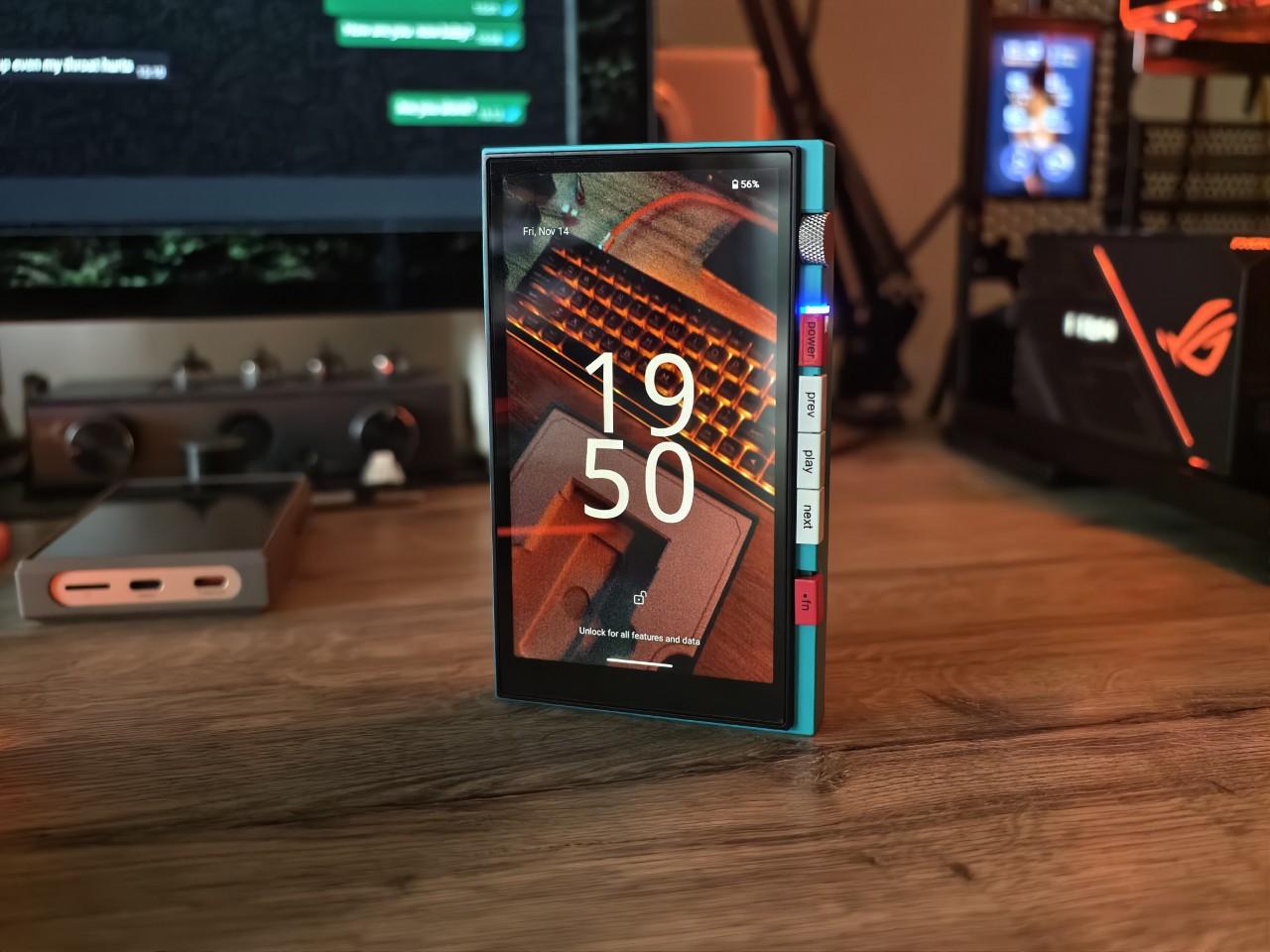
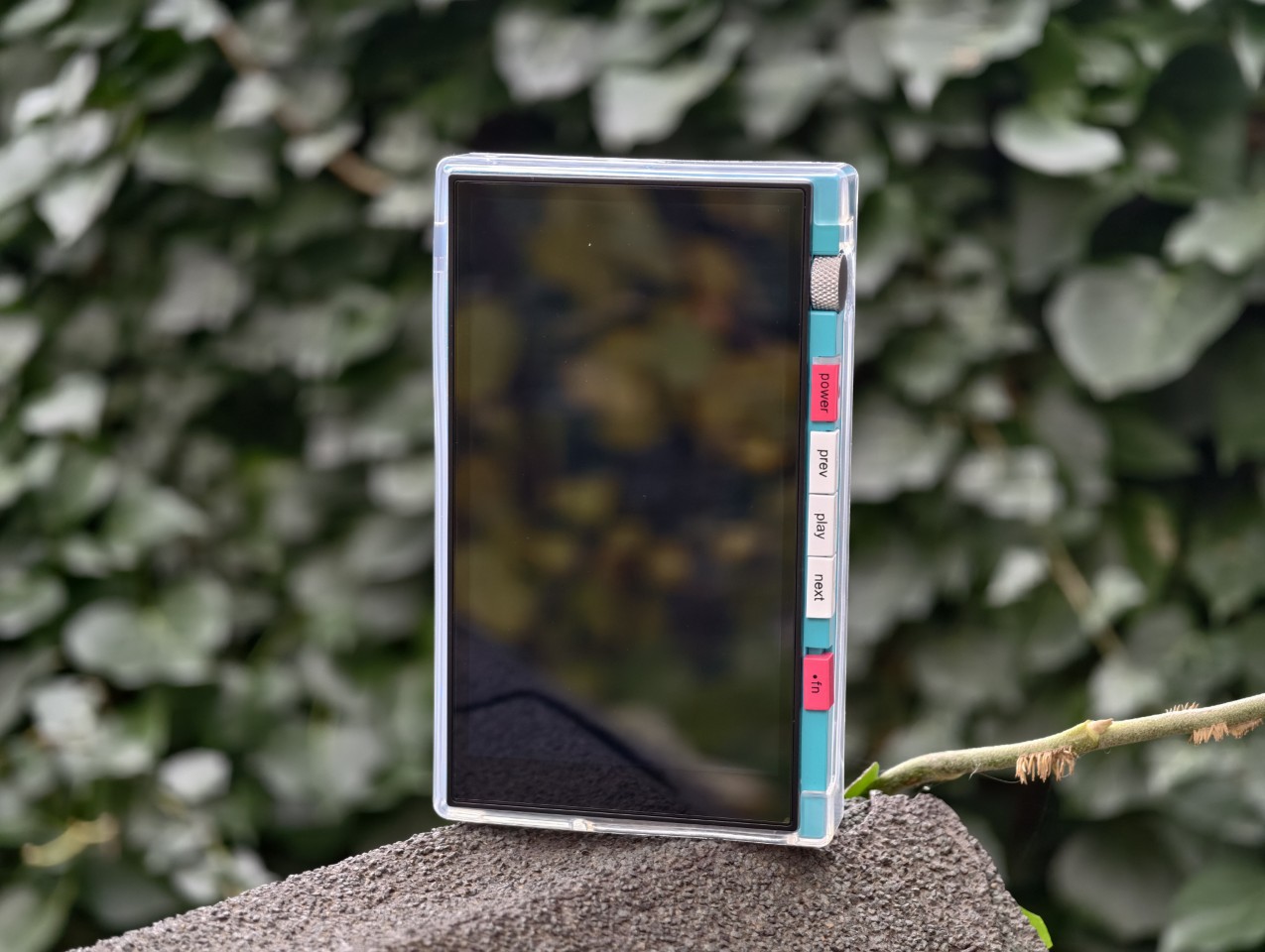
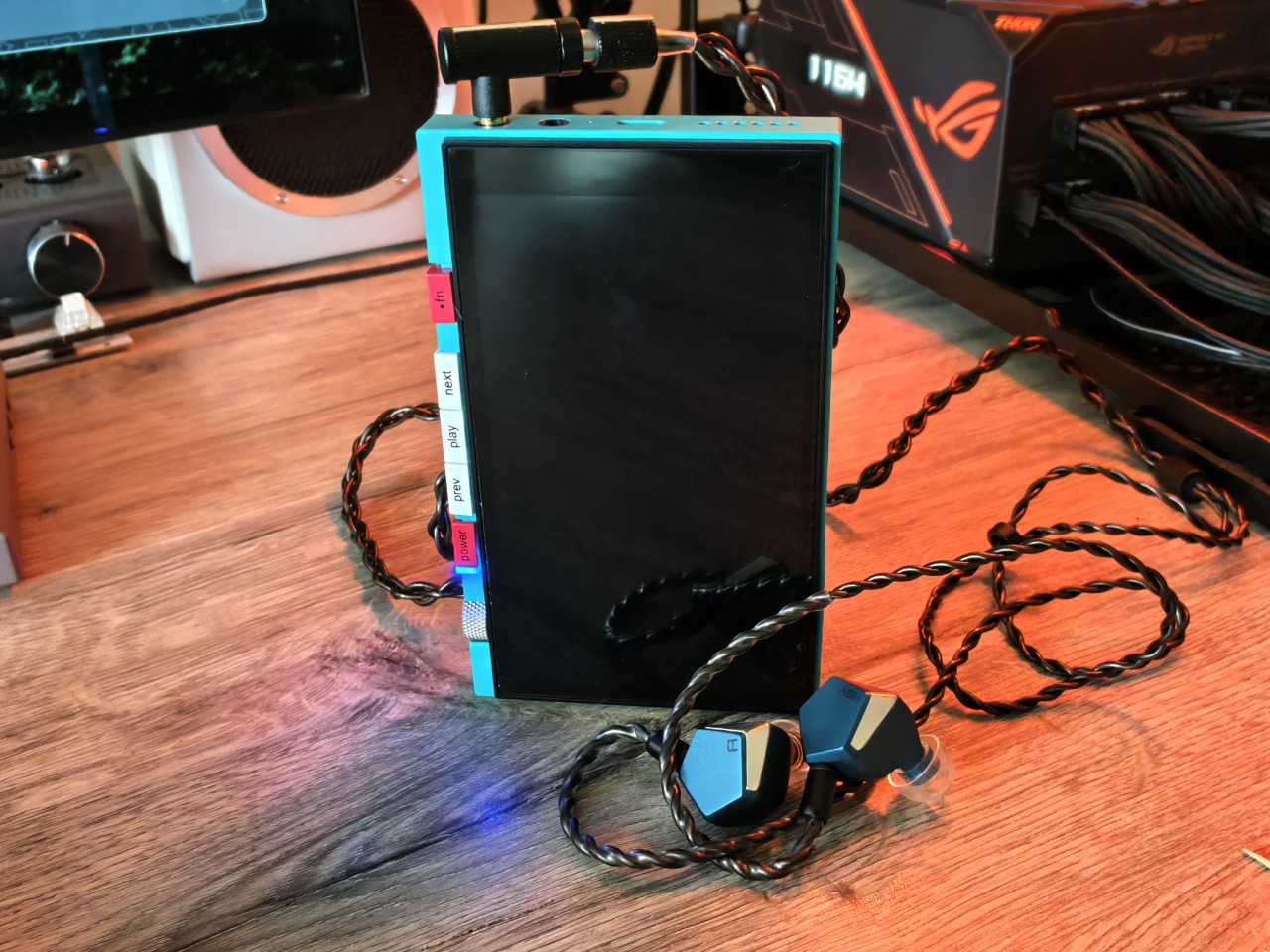
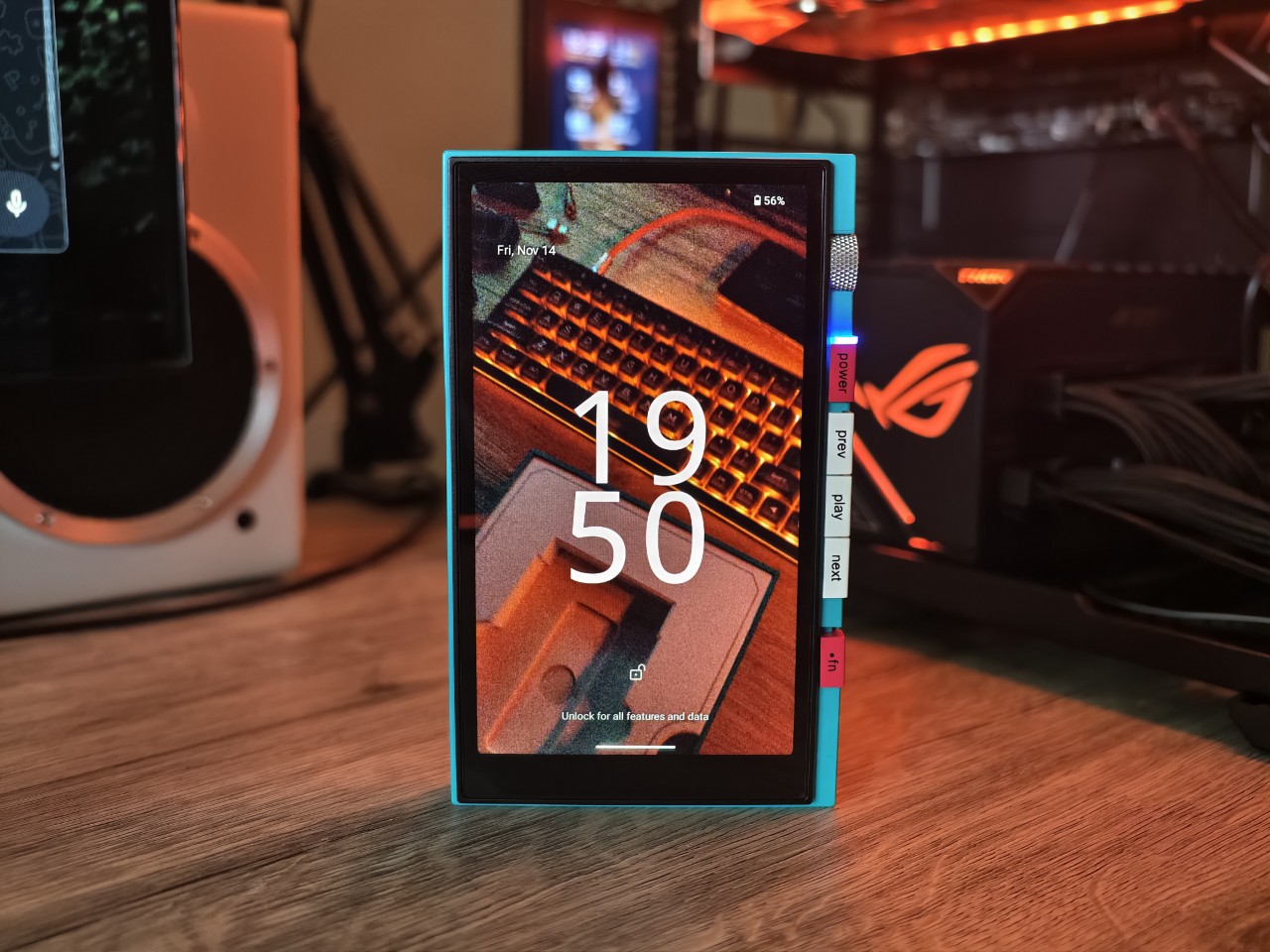
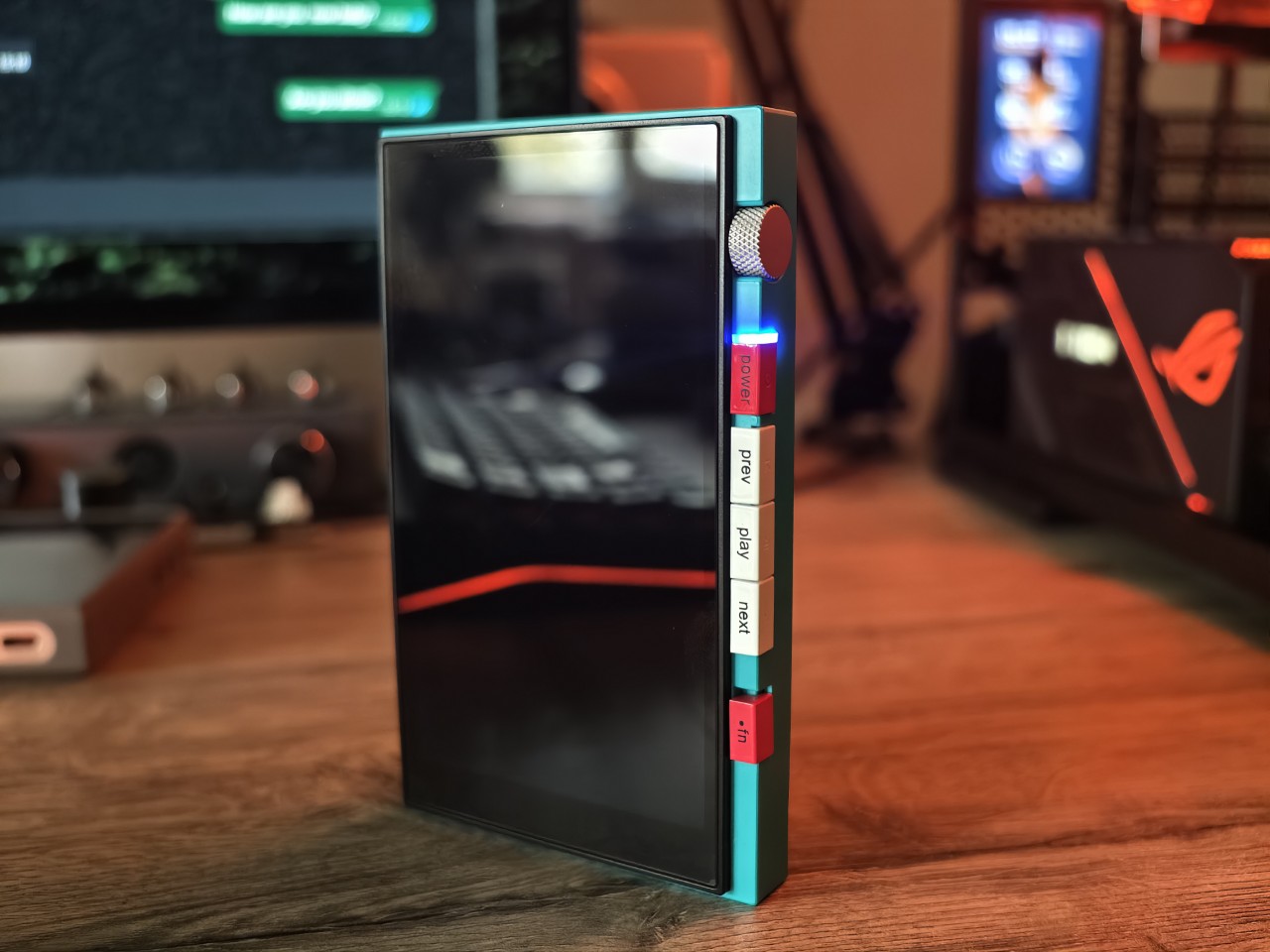
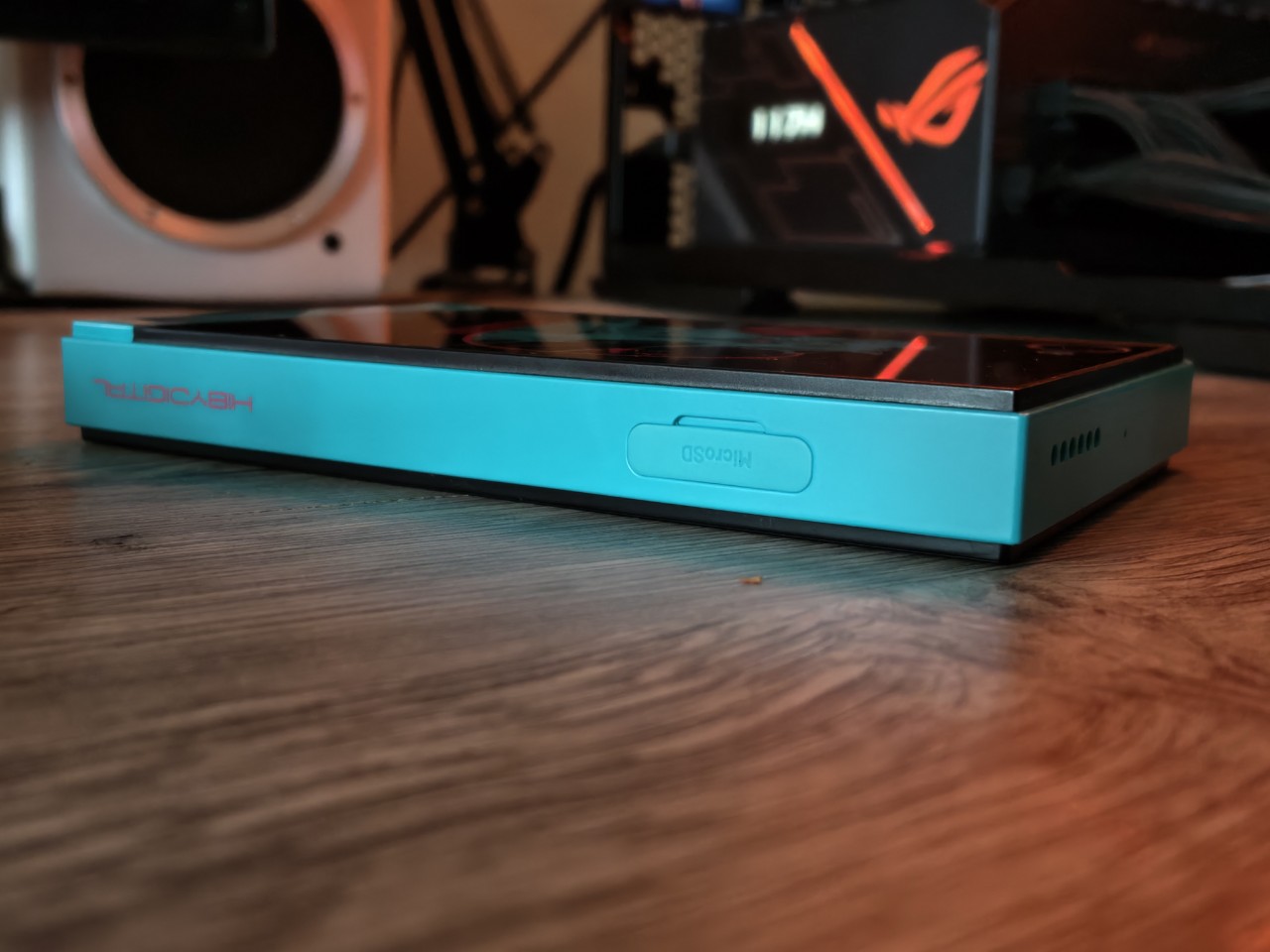
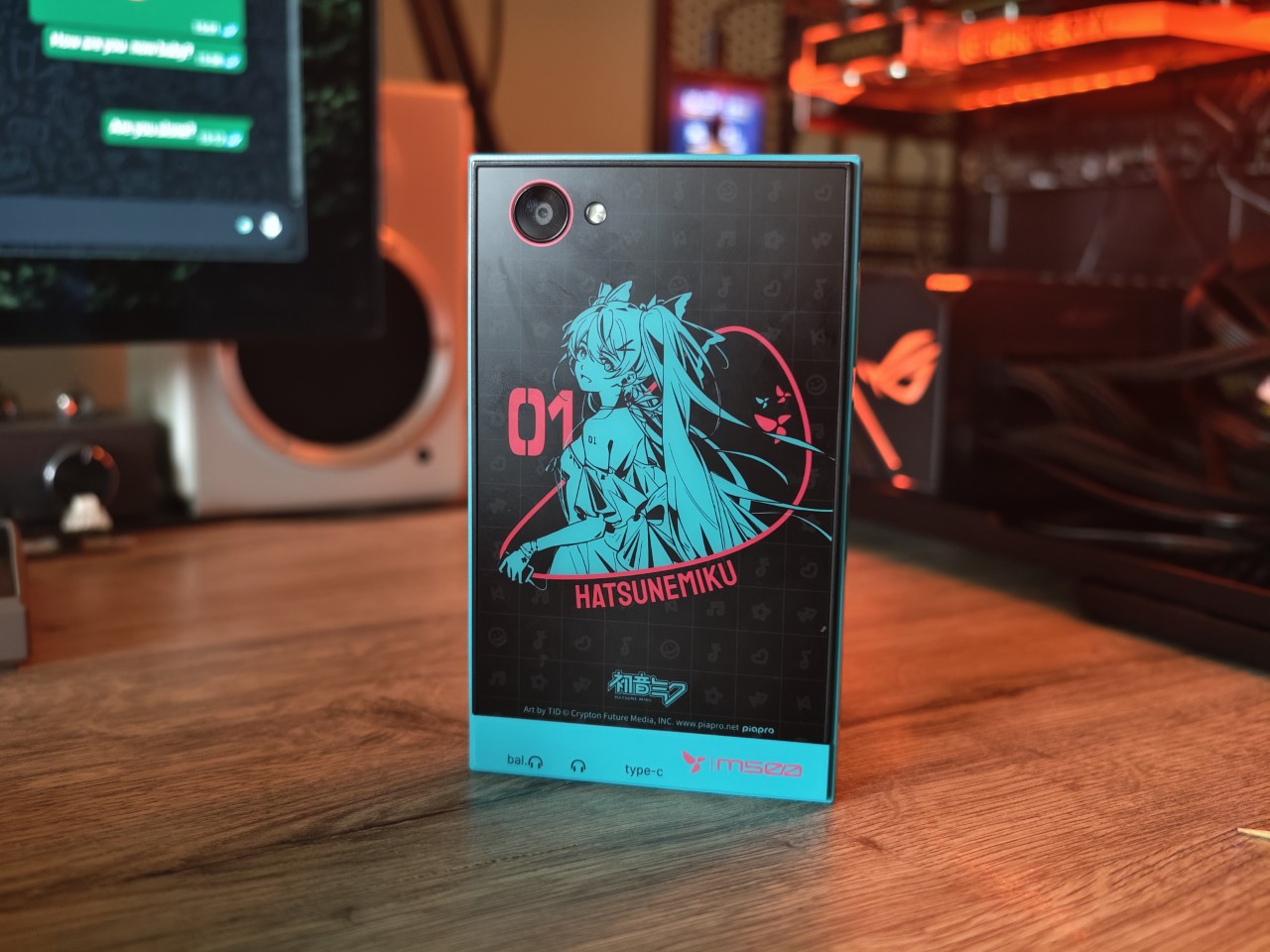
The first thing that strikes you about the M500 is its unapologetic identity. The Hatsune Miku Edition is not a subtle branding exercise; it is an immersion. The chassis is finished in a vibrant, metallic “Miku Teal” (turquoise) that catches the light beautifully.
Measuring with a 5-inch display, the M500 harkens back to the era of the iPhone 5. It fits perfectly in the palm of one hand, allowing your thumb to reach all corners of the screen. This “pocketability” is a breath of fresh air compared to the “brick” DAPs like the HiBy R8 II or the FiiO M17.
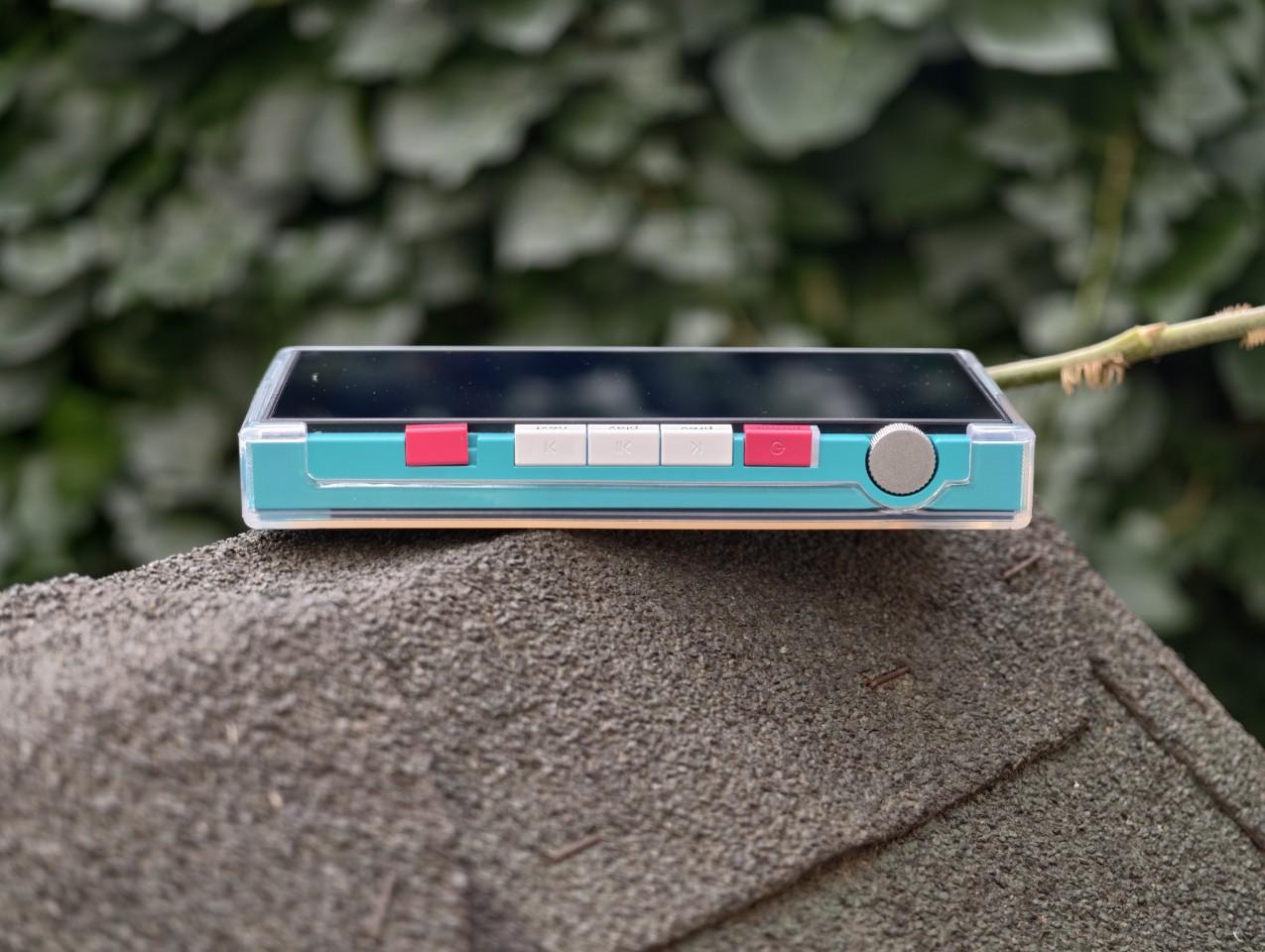
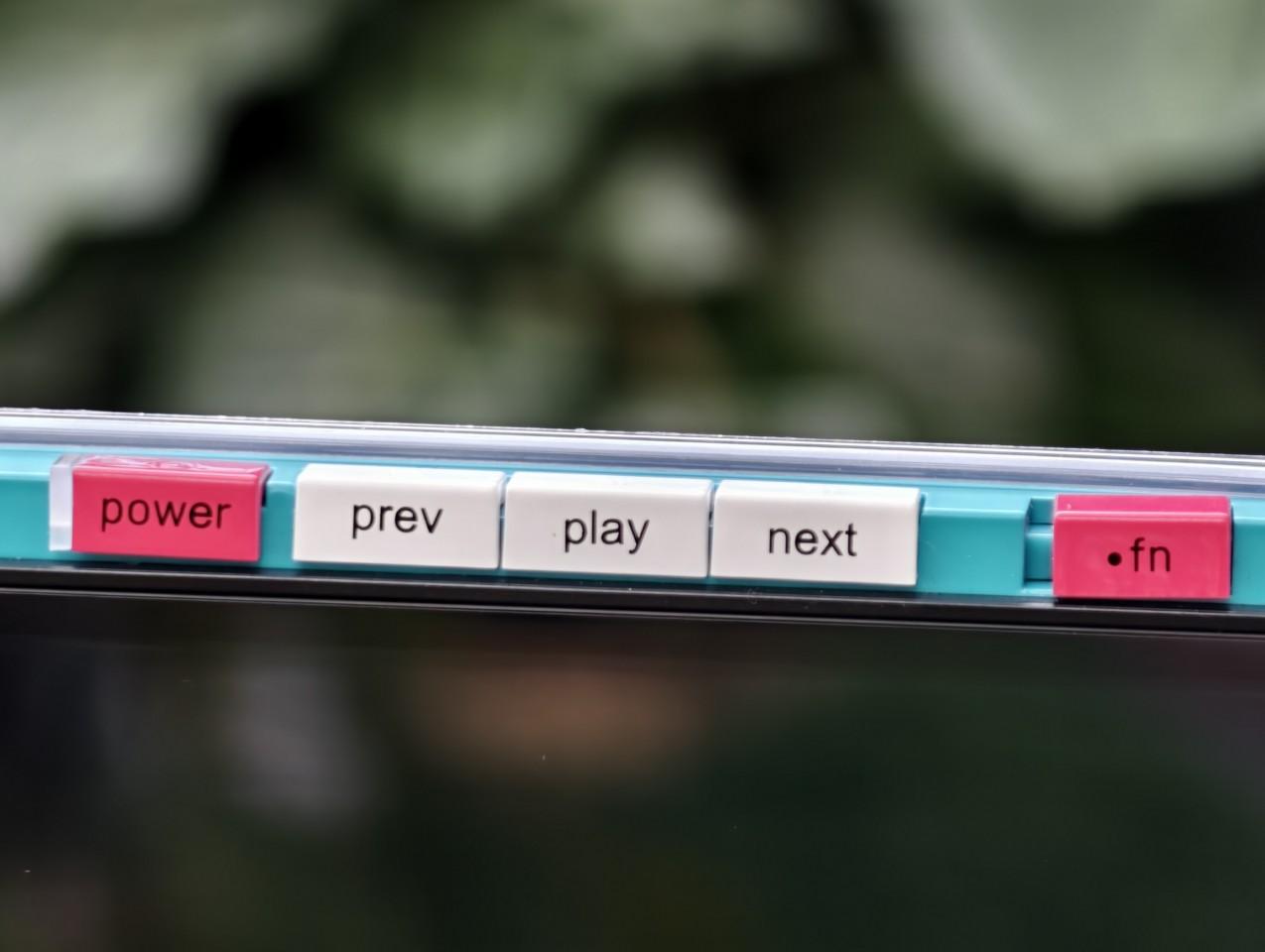
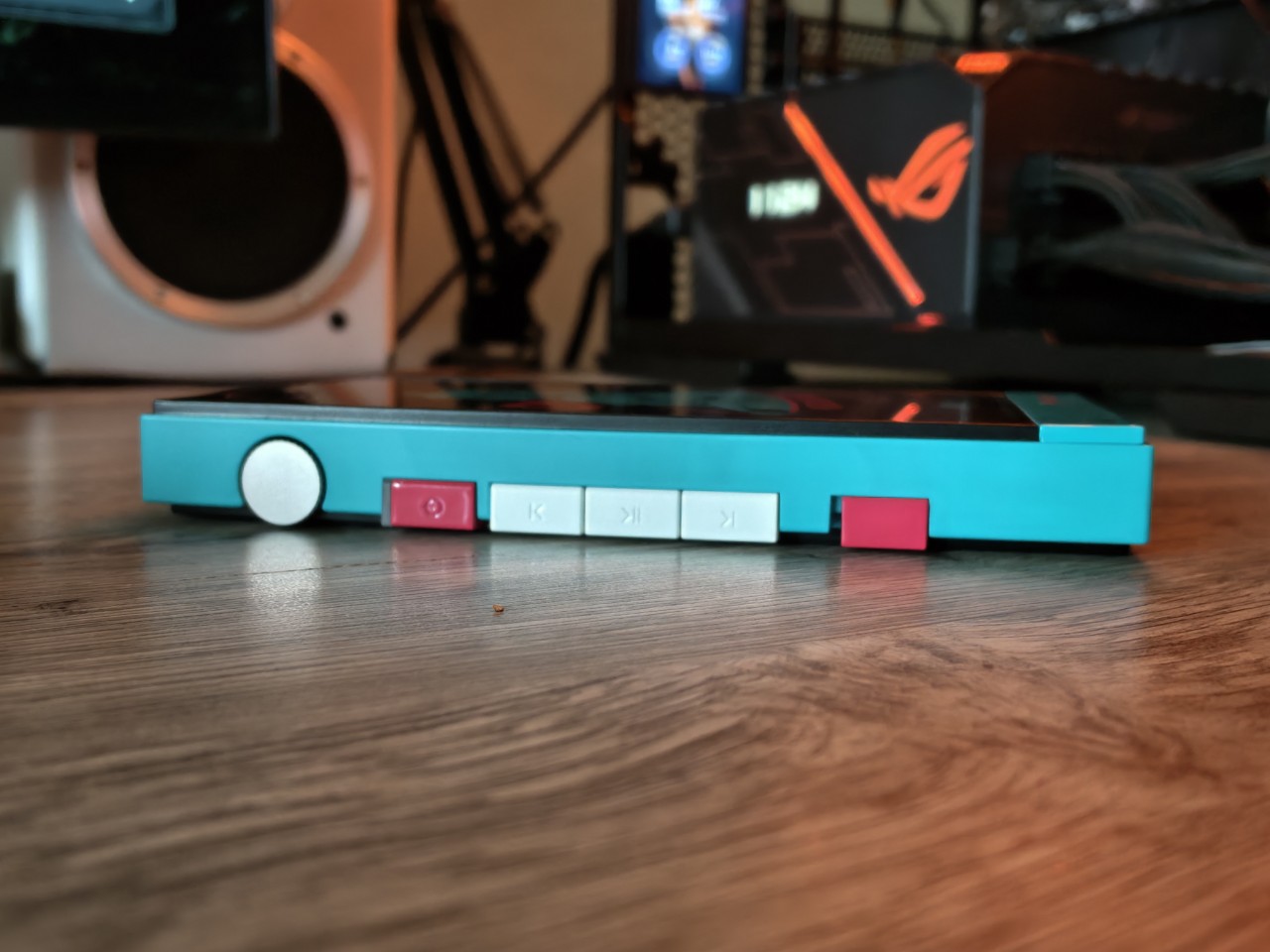
HiBy has listened to user feedback from the M300. The M500 introduces a high-quality physical volume wheel on the top-right edge. It has distinct, tactile clicks that provide confidence when adjusting volume in a pocket. Below the wheel, you find the playback buttons and a customizable “Fn” (Function) key, which can be mapped to anything from a play/pause toggle to a quick-launch for the camera or voice recorder.
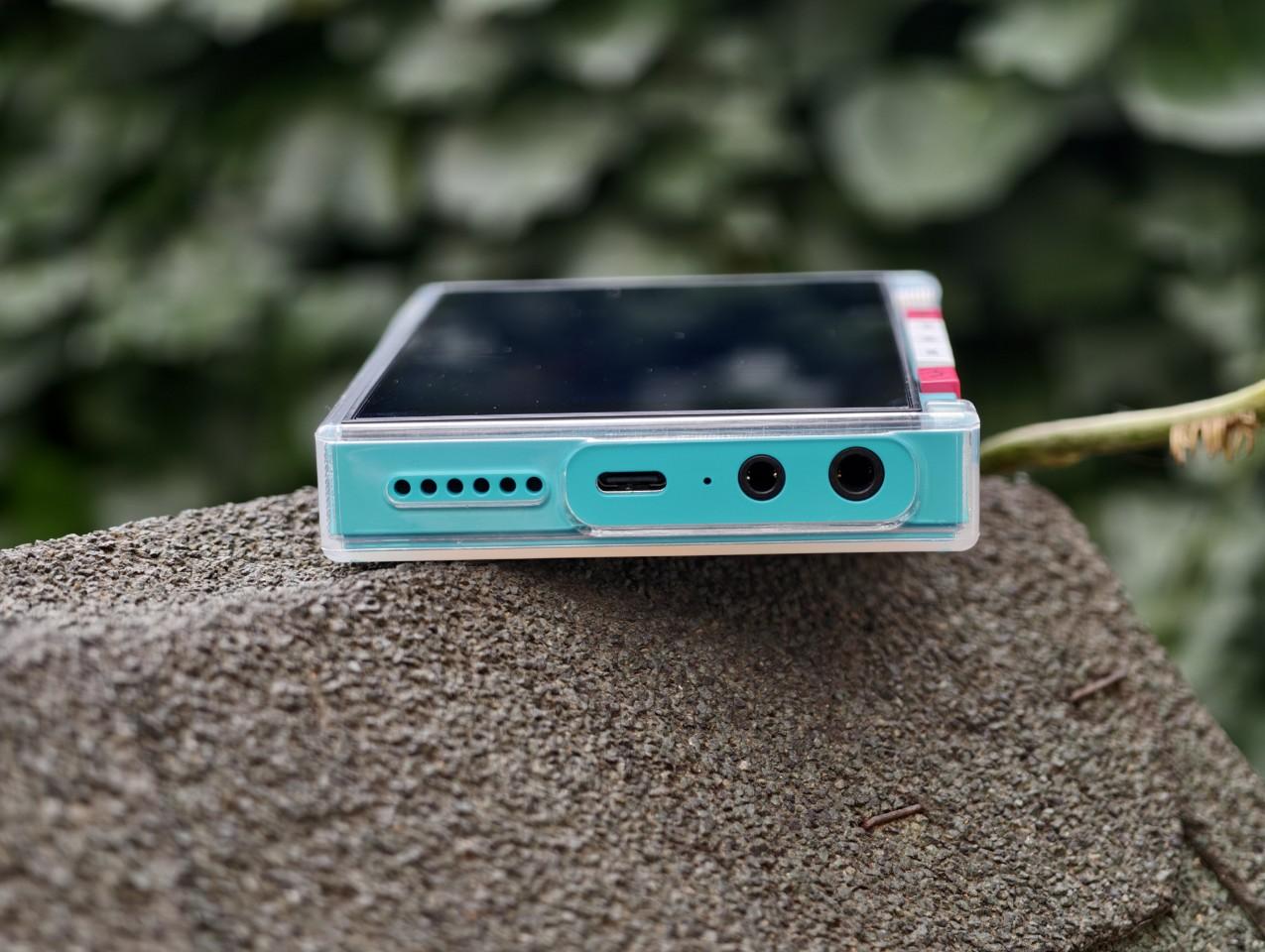
The 5-inch IPS screen sports a 720×1280 resolution. While not “Retina” by modern flagship phone standards, on a 4-inch panel, the pixel density is high enough that text remains sharp, and album art looks vivid. The colors are punchy, and the brightness is sufficient for outdoor visibility, though it struggles slightly under direct, high-noon sunlight.
Hardware and Internal Architecture
Under the hood, the M500 is a significant departure from its predecessor. It moves into “serious audiophile” territory while maintaining the hardware of a modern mid-range smartphone.
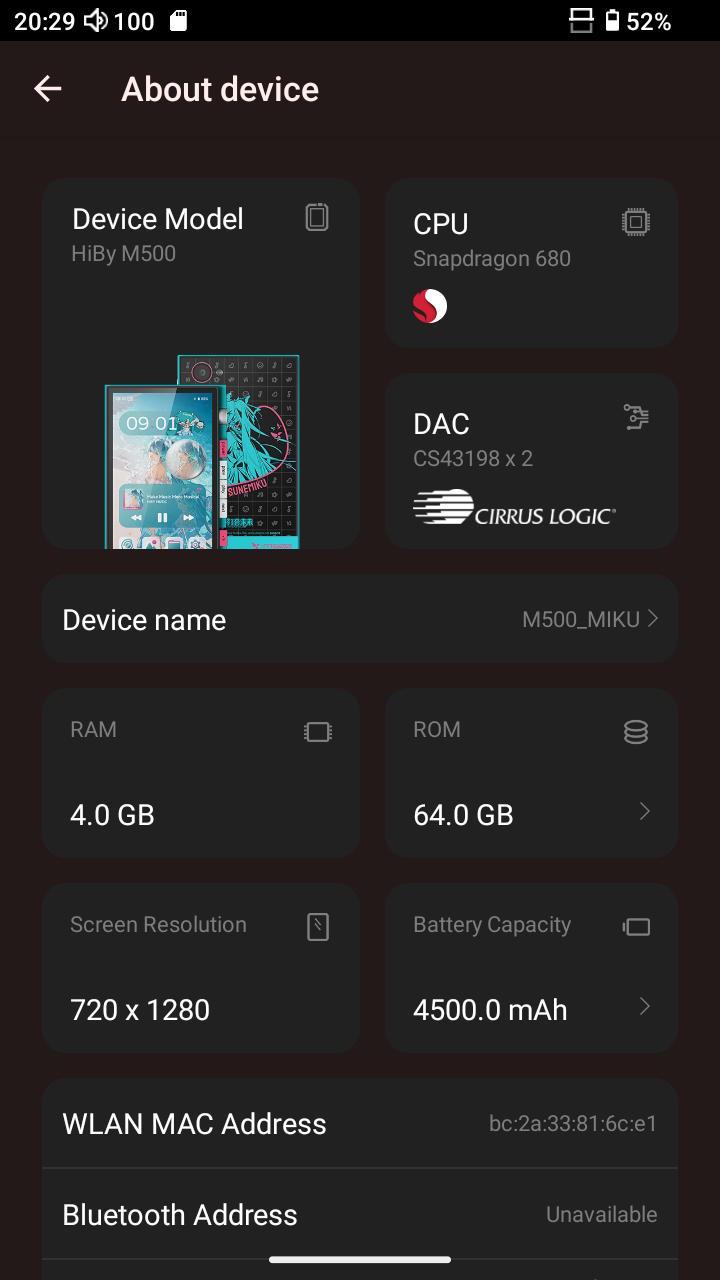
The Heart: Dual CS43198 HiBy opted for a dual-DAC setup using the Cirrus Logic CS43198 chips. These are part of Cirrus Logic’s “MasterHIFI” series and are beloved in the community for their “musical” yet highly transparent sound. By using two chips in a balanced configuration, the M500 achieves better channel separation and a lower noise floor.
The Muscle: Snapdragon 680. Most DAPs suffer from “UI Lag.” They use outdated processors that make scrolling through a large Tidal library a chore. The M500 uses the Snapdragon 680 paired with 4GB of RAM. This makes the Android 14 interface buttery smooth. Whether you are multitasking between Spotify and Discord or browsing the web, the M500 feels like a modern smartphone.
Connectivity: The 4G Factor. Perhaps the most controversial yet exciting feature is the inclusion of a SIM card slot. The M500 supports 4G LTE. This transforms the device from a passive player into a standalone communicator. You can stream lossless music on the go without tethering to your phone, use it as a mobile hotspot, or even use it as a “digital detox” phone that still allows for essential messaging and calls.
The Software Experience: Android 14 and HiBy OS
The M500 runs a near-stock version of Android 14, which is a rarity in the DAP world, where many flagship players are still stuck on Android 12.
Direct Transport Audio (DTA). The biggest hurdle for Android-based audio is the operating system’s internal sample rate conversion (SRC), which forces all audio through a 48kHz “resampling” filter, degrading quality. HiBy’s DTA architecture bypasses this at the system level. This ensures that when you play a 24-bit/192kHz FLAC file or an MQA stream, the DAC receives the pure, bit-perfect data.
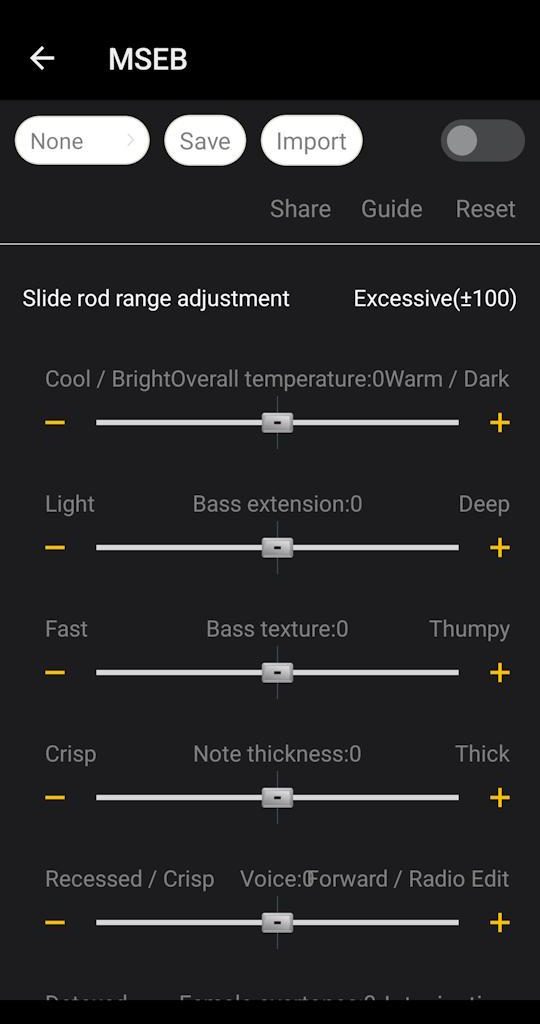
MSEB (Mage Sound 8-Ball). HiBy’s proprietary MSEB tuning suite is included. Unlike a standard Graphic EQ, MSEB allows you to adjust sound based on descriptive terms like “Temperature” (Cool vs. Warm), “Bass Extension,” “Texture,” and “Air.” It is the most intuitive DSP (Digital Signal Processing) tool in the industry, allowing users to fine-tune the M500 to match their specific IEMs perfectly.
Battery Life and Thermal Management
With a 3100mAh battery, the M500 is a decent performer, but not a class leader.
-
Audio Only (Local Files): You can expect around 10–12 hours of playback via the 4.4mm balanced port.
-
Streaming over Wi-Fi/LTE: This drops the battery life to about 6–8 hours, depending on screen brightness and the “heaviness” of the app.
-
Heat: Even during long sessions or while charging, the M500 stays remarkably cool. The Snapdragon 680 is an efficient chip, and the aluminum body acts as a heat sink for the DAC/Amp stage.
The Hatsune Miku Factor: More than a Skin
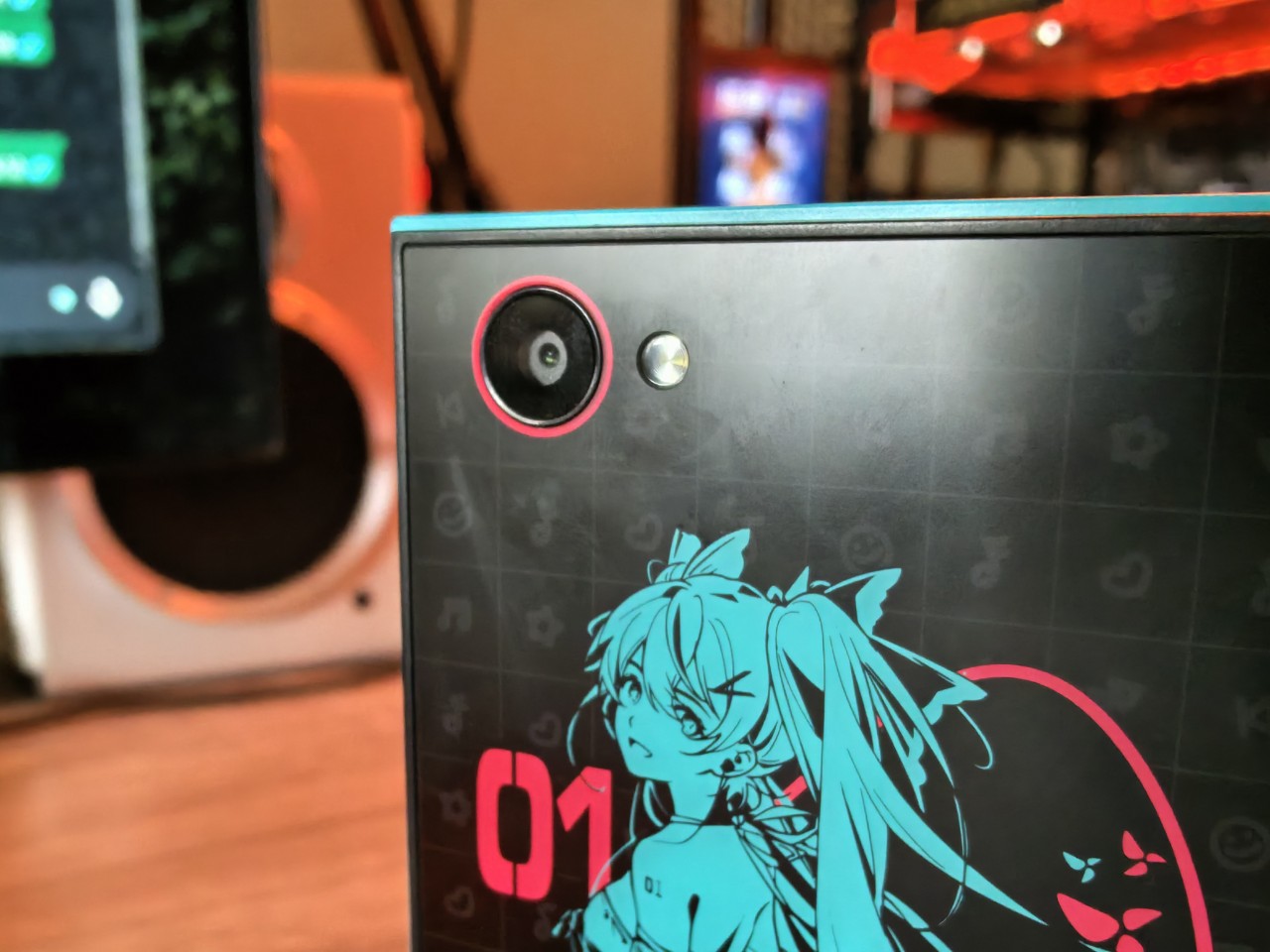
For fans of Hatsune Miku, this device is a “holy grail.” The collaboration includes:
-
Custom UI: Unique icons, charging animations, and wallpapers featuring Miku.
-
Leather Case: A high-quality teal case with embossed Miku motifs (Optional).
-
Packaging: A collector’s box that is worth keeping on a shelf.
-
Engravings: Subtle markings on the chassis that signify its limited nature.
Even if you aren’t a “Vocaloid” fan, the colorway is one of the most striking in the industry, standing out in a sea of black and silver boxes.
Driving Power: From IEMs to Full-Sized Cans
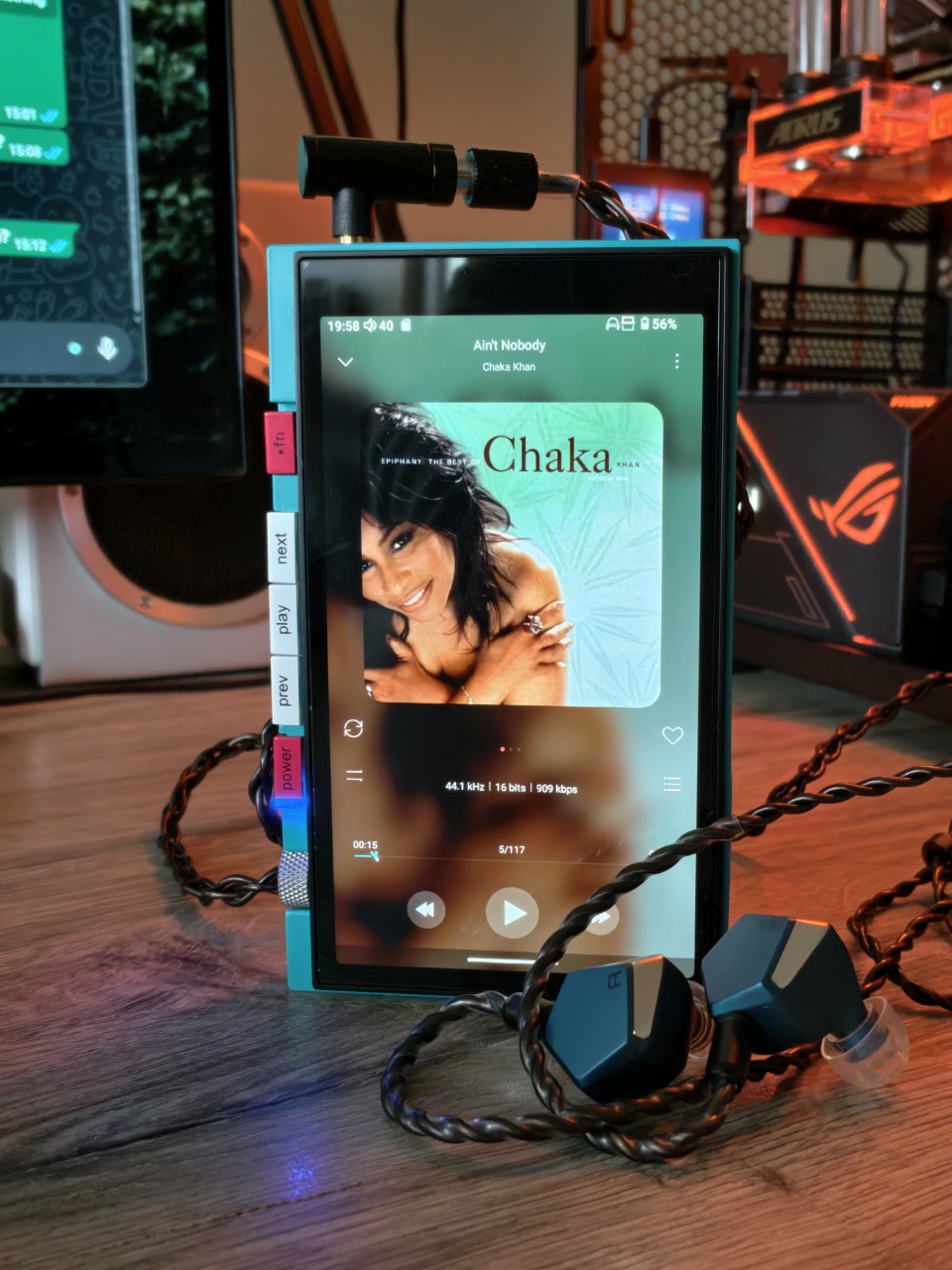
The M500 features two outputs: a 3.5mm single-ended jack and a 4.4mm Pentaconn balanced jack.
-
3.5mm SE: Provides roughly 100mW @ 32Ω. This is plenty for almost any consumer headphone and most IEMs.
-
4.4mm Balanced: This is where the magic happens. Delivering up to 310mW @ 32Ω, it has the voltage swing necessary to drive more demanding gear.
In testing, the M500 handled the Sennheiser HD650 (300 ohms) with surprising competence. While it didn’t reach the “transient authority” of a dedicated desktop amp, the volume was more than sufficient, and the sound didn’t feel thin or strained. For planars like the Hifiman Sundara, the M500 provided enough current to keep the bass tight and the transients snappy.
The Lifestyle Features: LTE, Camera, and FM Radio
What separates the M500 from the rest of the HiBy “R” line is its focus on being a “Digital Assistant.”
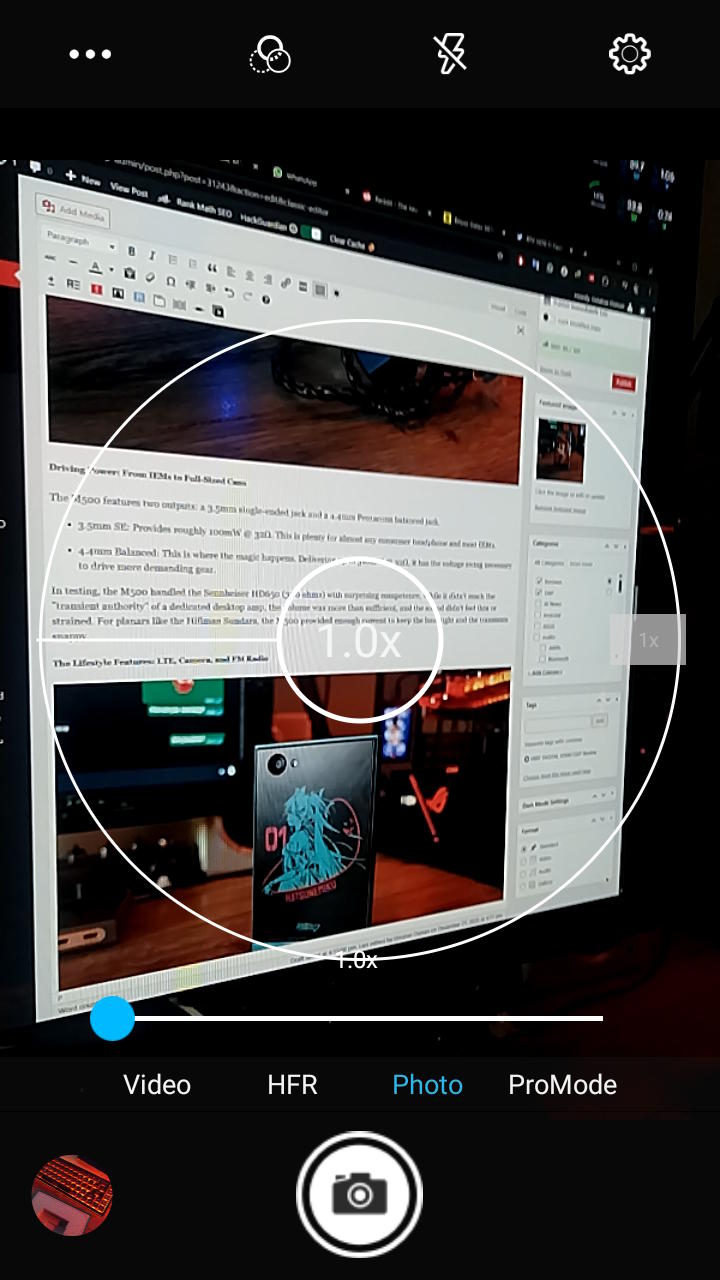
The Camera. The rear camera is an interesting addition. It is not going to replace your flagship smartphone; the sensor is modest, struggling in low light, and lacking optical stabilization. However, for “lifestyle” snaps—a photo of your current setup, a quick shot of a concert poster, or a “vibey” lo-fi photo for social media—it is perfectly functional. It adds to the feeling that this is a device you can take out for the day without needing anything else.
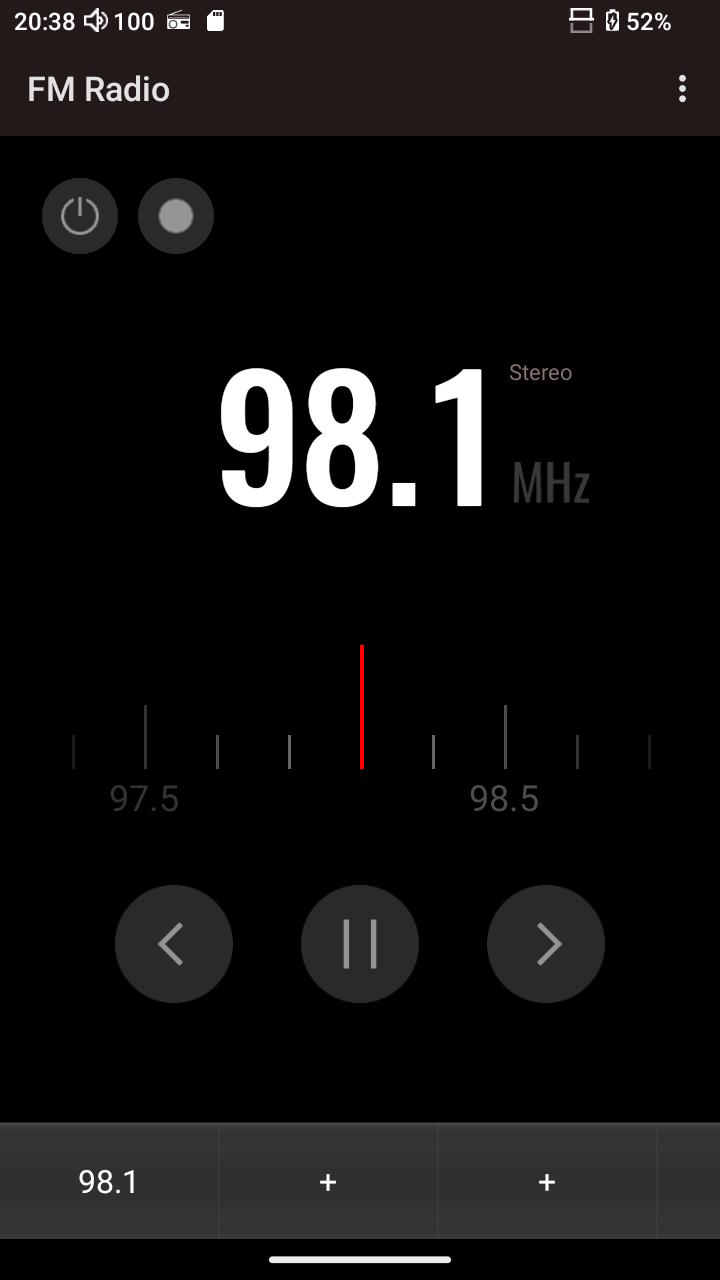
FM Radio. In a nod to old-school portable players, the M500 includes a hardware FM radio. In an era of streaming, there is something deeply nostalgic and practical about being able to tune into local broadcasts without using data.
4G LTE and Calls. With a SIM card, the M500 can make calls and send texts. The built-in speaker is surprisingly loud, though a bit thin. Using it as a dedicated “music phone” allows you to leave your primary device (and its endless notifications) at home while remaining reachable in emergencies.
In The Box
Full Specs
Core Platform
-
Operating System: Android 14 (Global Version)
-
Processor (SoC): Qualcomm Snapdragon 680
-
RAM: 4GB LPDDR4X
-
Internal Storage: 64GB eMMC
-
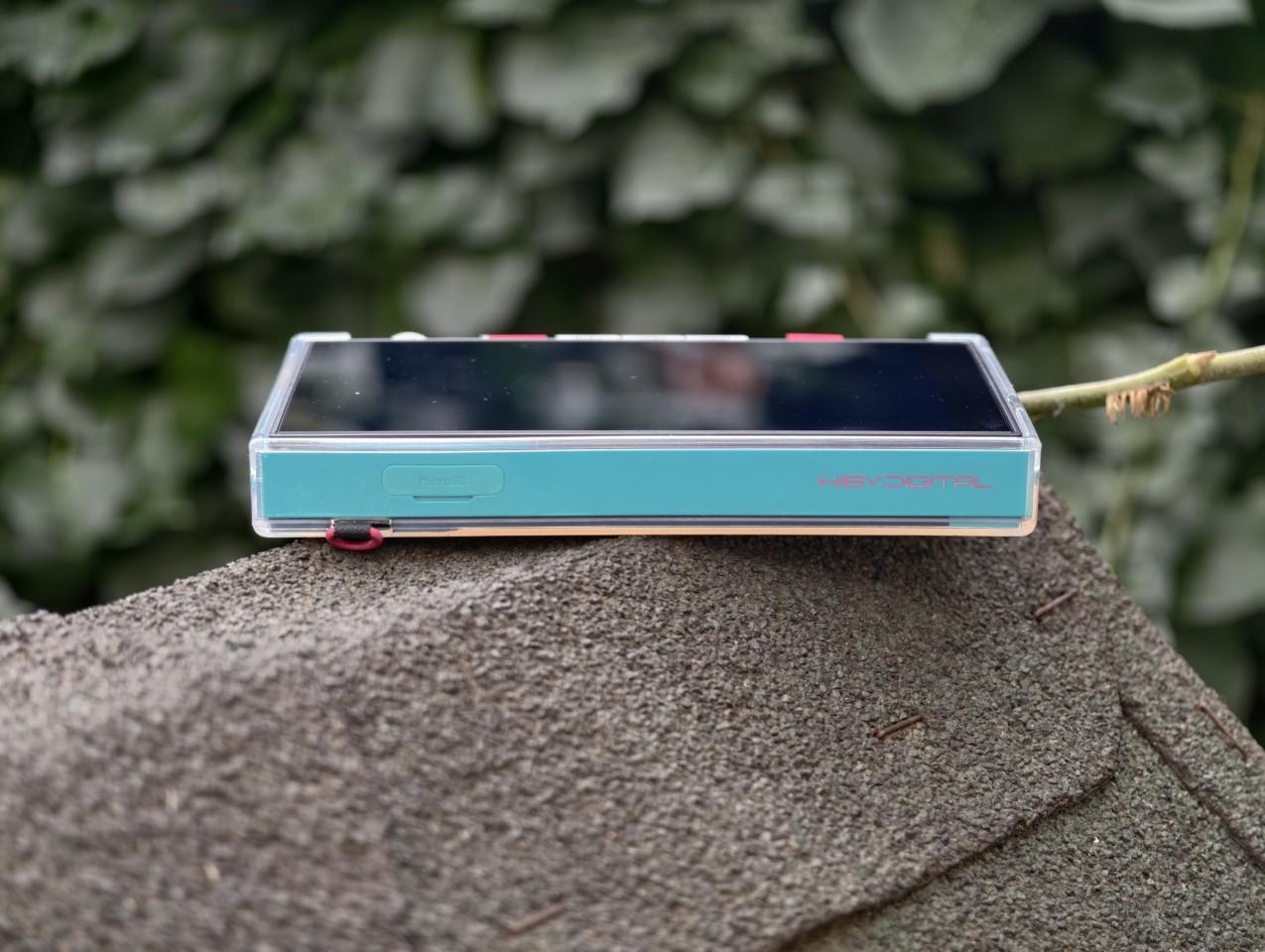
External Storage: MicroSD card slot (supports up to 2TB)
-
Audio Architecture: DTA (Direct Transport Audio) System-wide Bit-perfect Output
Audio Hardware
-
DAC: Dual Cirrus Logic CS43198 (Flagship-grade MasterHIFI chips)
-
Amplifier: 4-way independent amplification (4x SGM8261 op-amps)
-
Output Interfaces:
-
3.5mm Single-ended (Phone Out / Line Out)
-
4.4mm Balanced (Phone Out / Line Out)
-
-
USB Port: Type-C USB 3.1 (supports USB DAC output and input)
Display & Build
-
Screen: 5.0-inch IPS Display
-
Resolution: 720 x 1280
-
Chassis Material: CNC-Machined Aluminum Alloy
-
Physical Controls:
-
Independent Volume Wheel (Encoder)
-
Playback Buttons (Previous, Play/Pause, Next)
-
Customizable Fn (Function) Key
-
-
Dimensions: Approximately 113 x 60 x 14 mm
Connectivity
-
4G LTE: Supports Nano-SIM for standalone data, calls, and streaming
-
Wi-Fi: Dual-band 2.4GHz / 5GHz (802.11 a/b/g/n/ac)
-
Bluetooth: Version 5.0
-
Bluetooth Codecs (Transmit): LDAC, aptX HD, aptX, AAC, SBC
-
Bluetooth Codecs (Receive): LDAC, AAC, SBC
Audio Performance Specs
-
Sampling Rates: * PCM: Up to 768kHz/32-bit
-
DSD: Up to DSD512 (Native)
-
-
Output Power (Balanced 4.4mm): 310mW @ 32Ω
-
Output Power (Single-ended 3.5mm): ~100mW @ 32Ω
-
SNR: 122dB (Balanced) / 118dB (SE)
-
Frequency Response: 20Hz – 80kHz
Power & Battery
-
Battery Capacity: 3100mAh
-
Charging: Supports 5V/2A charging (Standard Type-C)
-
Playback Time: Approximately 10–12 hours (depending on output and volume)
Additional Features
-
Camera: Rear-facing camera for casual photography/scans
-
FM Radio: Built-in hardware FM tuner
-
Microphones: Dual microphones for recording and voice calls
-
Speaker: Built-in bottom-firing loudspeaker
-
Exclusive Content: Deeply customized Hatsune Miku UI, 3x custom Miku system voice sources, and themed startup animations.
Disclaimer: The HiBy Digital M500 DAP was kindly provided by HiBy for review.
Sound Analysis
The “HiBy Sound” has evolved over the years. Early HiBy players were often criticized for being too clinical or “thin.” The M500, however, embraces a more organic, full-bodied presentation that focuses on engagement.
Bass
The low-frequency performance of the M500 is defined by its control. The dual CS43198 implementation provides a “natural” bass response.
-
Sub-Bass: There is a satisfying rumble when called for. In tracks like Hans Zimmer’s Why So Serious?, the M500 manages to reach into the lowest octaves without losing composure. It doesn’t artificially boost the sub-bass, but it provides enough “physicality” to feel the air moving in your IEMs.
-
Mid-Bass: This is where the M500 shows its musicality. The mid-bass has a slight warmth—a “roundness”—that gives bass guitars and cellos a realistic weight. It avoids the “bloat” that often plagues entry-level DAPs, ensuring that the bass never masks the lower mids.
-
Texture: The speed of the bass is impressive. It is “plucky” and agile, capturing the nuances of a vibrating string rather than just the thud of the note.
Midrange
The M500’s midrange is its greatest asset. It is slightly forward, bringing the artist into the room with you.
- Lower Mids: Male vocals have a rich, resonant quality. Instruments like acoustic guitars have a beautiful “woodiness” to them. There’s a sense of body here that makes the music feel “fleshed out” rather than skeletal.
- Upper Mids: Given the Hatsune Miku branding, it is no surprise that the upper-mids are tuned to perfection for female vocals. There is a “sweetness” and a lift here that makes high-pitched voices sound ethereal and clear without becoming “shouty.”
- Timbre: The instrument’s timbre is remarkably natural. Pianos, often the hardest instrument to replicate, have the correct decay and weight to each keypress.
Treble
The treble tuning on the M500 is “safe” but detailed. HiBy has avoided the “ESS Glare” (a common criticism of some Sabre DACs that can sound sharp or metallic).
-
Extension: The treble extends well, providing a sense of “air” and openness to the soundstage. You can hear the shimmer of cymbals and the trailing edges of high-frequency notes clearly.
-
Sibilance Control: The M500 is very forgiving. Even with poorly recorded “hot” tracks or naturally bright IEMs, the M500 manages to smooth out the harsh “S” and “T” sounds.
-
Detail Retrieval: While it isn’t a “detail monster” in the way a $3,000 desktop DAC might be, it punches well above its weight class. It reveals micro-details—the sound of a singer taking a breath, the sliding of fingers on a fretboard—without forcing them into your face.
Technicalities
-
Soundstage: Using the 4.4mm balanced output, the soundstage is impressively wide. It creates a semi-circular arena around the listener’s head. It has good height and respectable depth, avoiding the “in-your-head” feel of cheaper players.
-
Imaging and Layering: The M500 excels at instrument separation. In complex orchestral pieces, you can mentally “map” where each section is located. Even when the music gets busy, the layers don’t collapse into a muddy mess.
-
Background Noise (Floor): One of the benefits of the dual CS43198 is the “black” background. Even with ultra-sensitive IEMs (like the Campfire Audio Andromeda), there is no audible hiss or “pop” when the music starts. This allows the dynamic range of the music to truly pop.
Comparisons: How does it stack up?
M500 vs. HiBy M300
The M500 is a significant upgrade. The M300 used a single CS43131 and lacked the power and refined “weight” of the M500’s dual CS43198. The addition of the volume wheel and the 4.4mm balanced output makes the M500 a much more “serious” audiophile tool.
M500 vs. HiBy R4
The HiBy R4 is the M500’s “pure audiophile” cousin. The R4 has a more industrial, “cyberpunk” design and focuses more on the amp stage. While the R4 might have a slight edge in raw power, the M500 wins on portability, software version (Android 14), and lifestyle features like the camera and LTE.
M500 vs. Smartphones with Dongles
Compared to a phone with a $100 dongle DAC, the M500 offers a vastly superior experience. The dedicated power supply for the audio circuit, the physical volume wheel, and the lack of interference from the phone’s internal components result in a much cleaner, more dynamic sound.
Sum-Up
The HiBy Digital M500 is a “unicorn” in the audio world. It refuses to be pigeonholed. It is too powerful and well-built to be an “entry-level” player, yet it is too lifestyle-focused to be a “purist” audiophile brick.
In conclusion, the HiBy Digital M500 is a triumphant success. It brings “joy” back to the DAP market. It sounds fantastic, looks incredible, and functions with a level of smoothness that puts many $1,000+ players to shame. Whether you’re listening to Miku’s latest tracks or a high-res jazz recording, the M500 delivers an experience that is as much about the “lifestyle” of music as it is about the “fidelity” of the sound.