
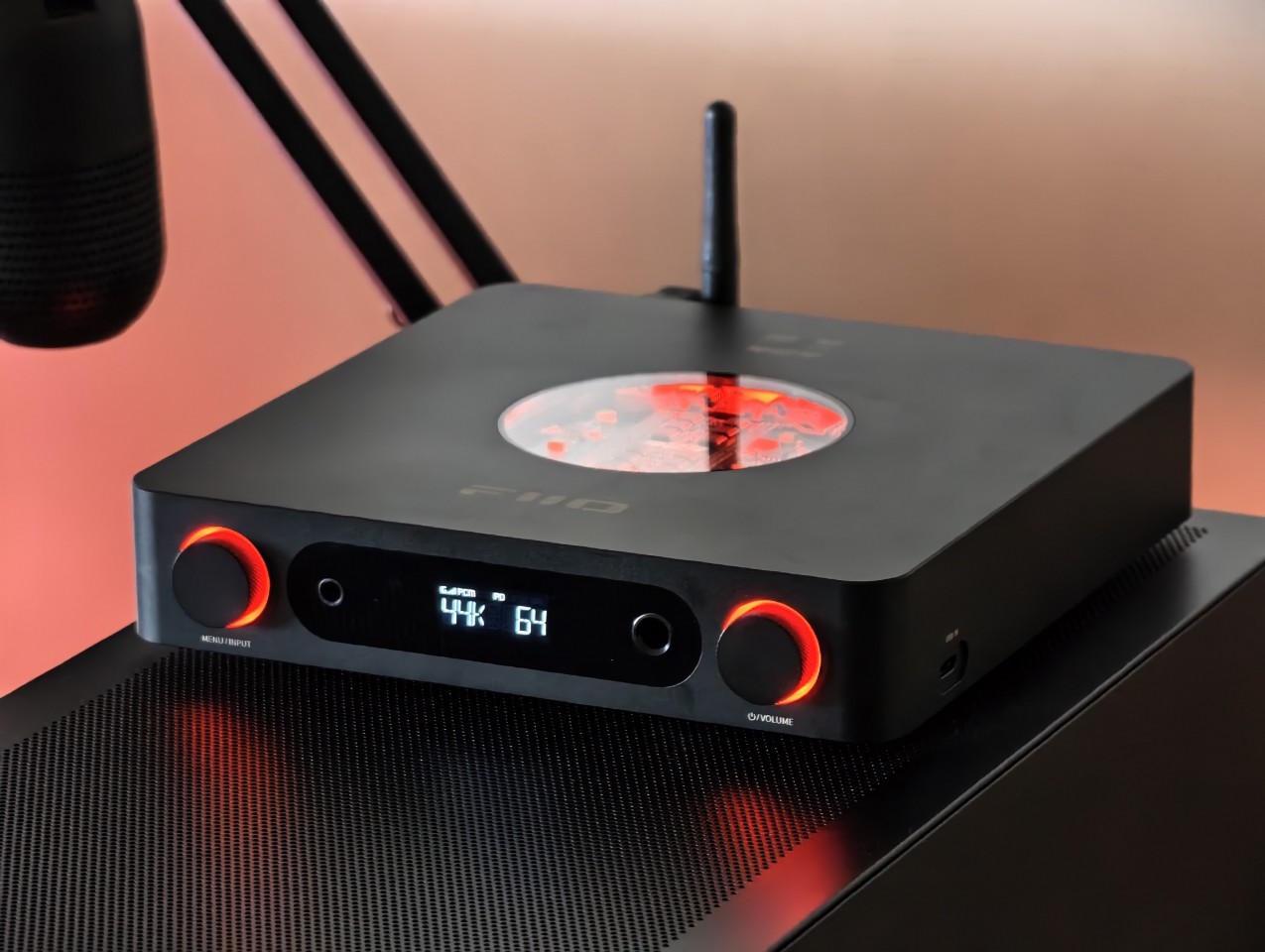

FiiO K13 R2R Review – Ultimate R2R Sound For The Masses
FiiO has established a strong reputation over the years for producing high-fidelity audio equipment that blends performance, innovation, and value. Founded in Guangzhou, China, FiiO has evolved from making portable digital audio players and small DACs and amplifiers into a key player in the desktop audio hardware market. Their engineering team is both capable and ambitious. This dedication to quality is particularly evident in the K13 R2R, which is not just a basic off-the-shelf design—still, a fully discrete R2R (resistor-ladder) DAC paired with a powerful amplifier.

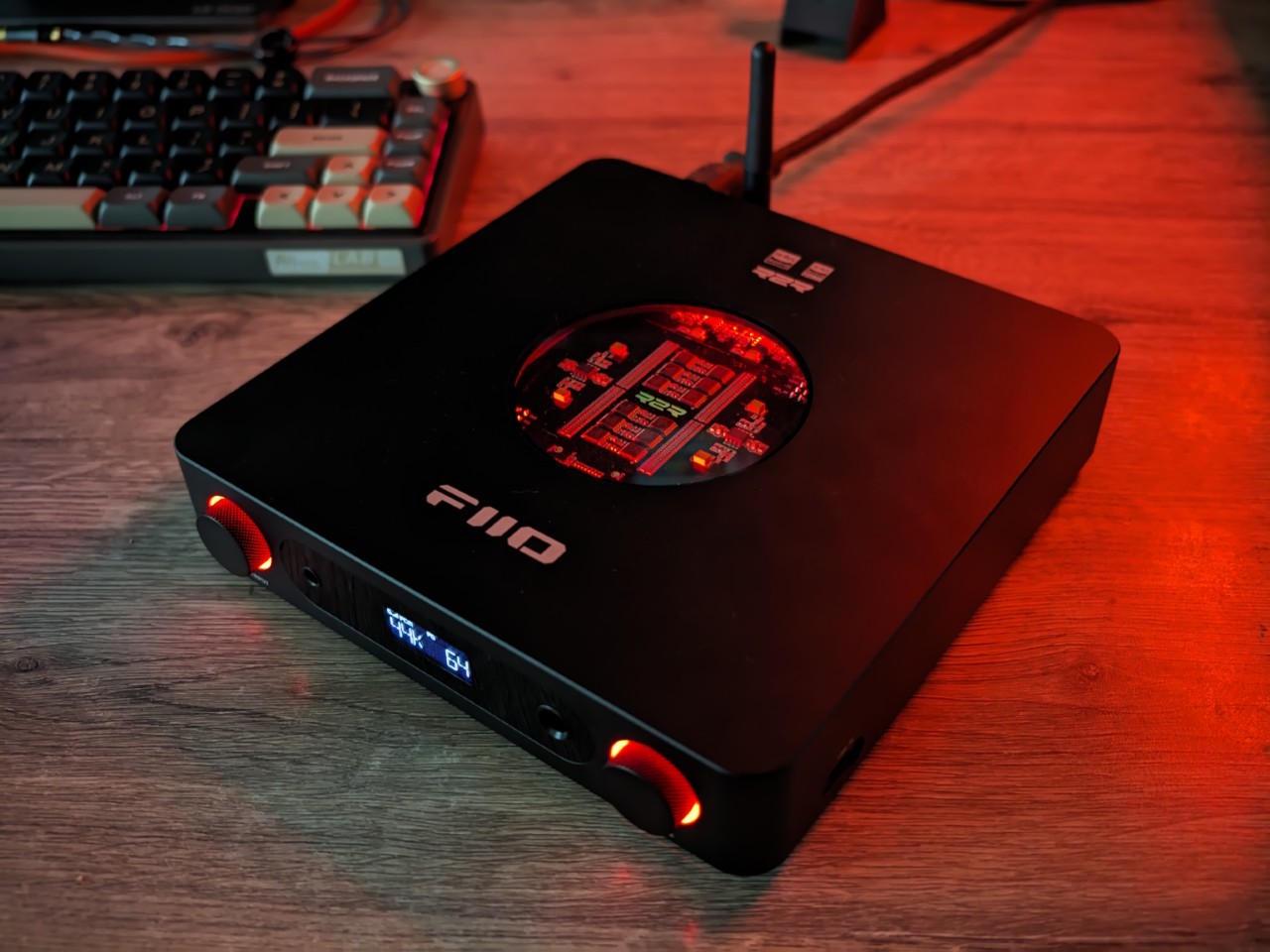
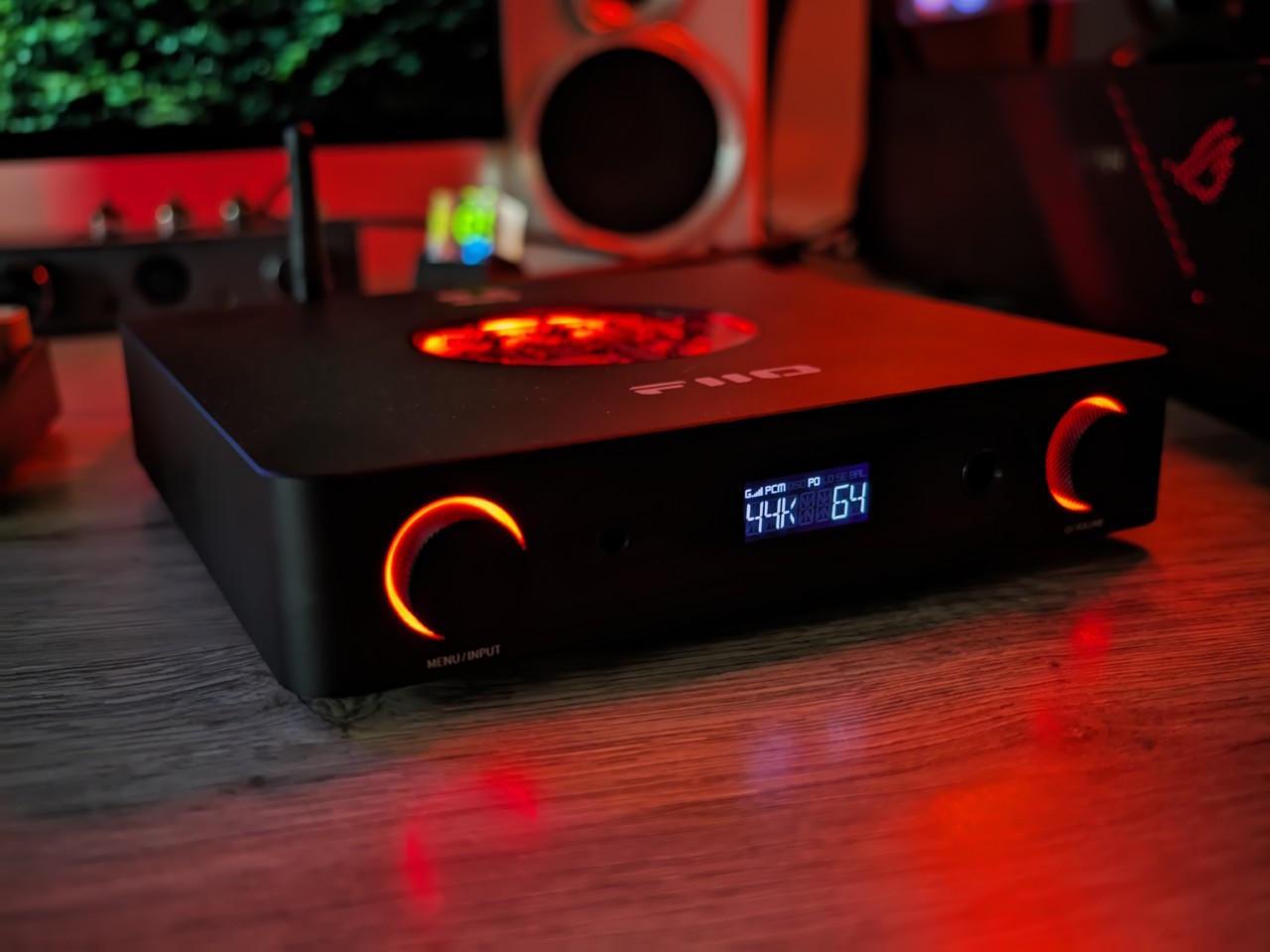
The FiiO K13 R2R is a desktop DAC and headphone amplifier that features a “true” R-2R resistor array design. It offers selectable modes for non-oversampling (NOS) and oversampling, a wide range of digital inputs, and delivers very high output power. In a market dominated by delta-sigma DACs, the K13 R2R represents a significant statement from FiiO. It showcases their ability to provide analog-like richness and detail through a resistor-ladder topology, all while maintaining modern convenience and robust driving power.
A Brief History of R-2R DACs & Why They Matter
To appreciate the significance of the resistor-ladder (R-2R) DAC, it’s helpful to examine the evolution of digital-to-analog converters (DACs). In the early days of digital audio systems, resistor-ladder DACs were commonly utilized in educational settings and basic digital-to-analog applications. These devices employed binary-weighted resistor networks to convert digital bits into corresponding voltages. However, in early commercial audio DACs, manufacturers often opted for simpler designs or hybrid implementations due to issues related to cost, thermal drift, and the challenges of precise resistor matching.
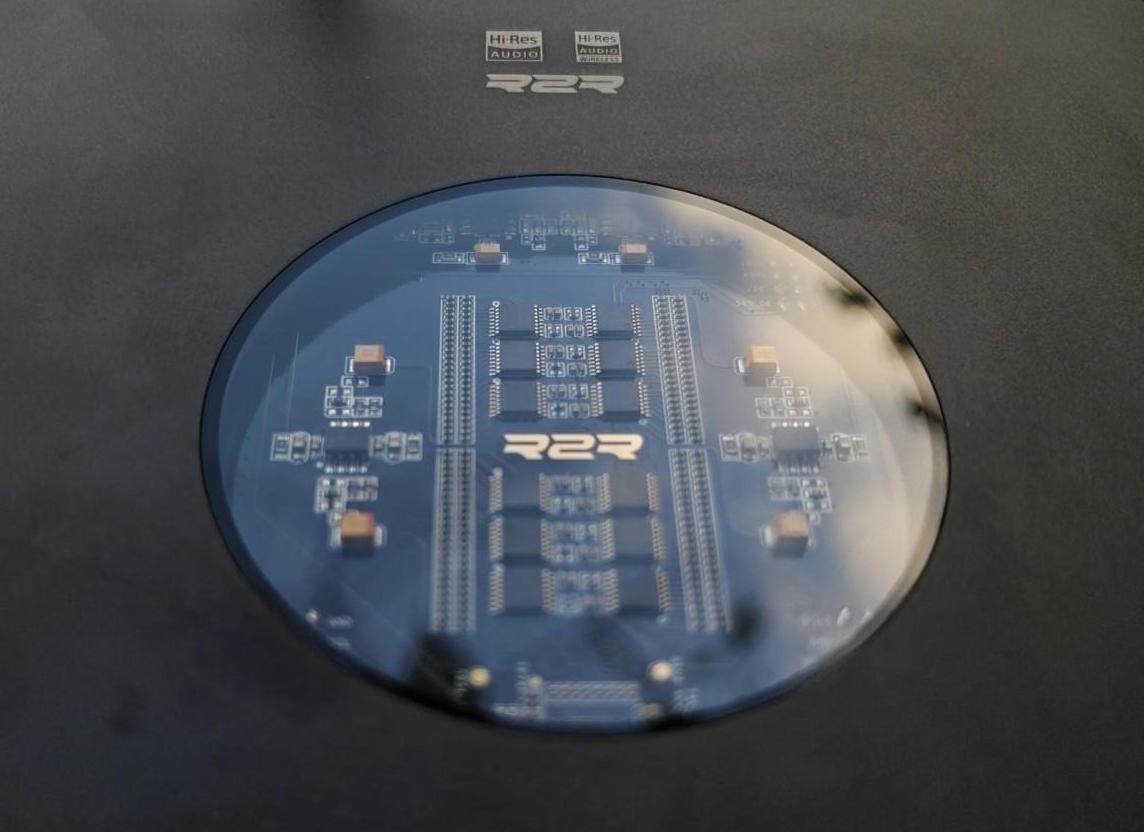
With advancements in technology, thin-film resistors with very tight tolerances (e.g., 0.1%) and low temperature drift became viable options. This progress allowed for the creation of high-precision resistor ladders that remain stable, accurate, and linear across a wide range of operating conditions. As a result, R-2R digital-to-analog converters (DACs) re-emerged in high-end audiophile equipment. Enthusiasts often prefer R-2R designs because they typically produce very natural harmonic structures and exhibit minimal quantization noise, providing a more “analog” feel to the sound.
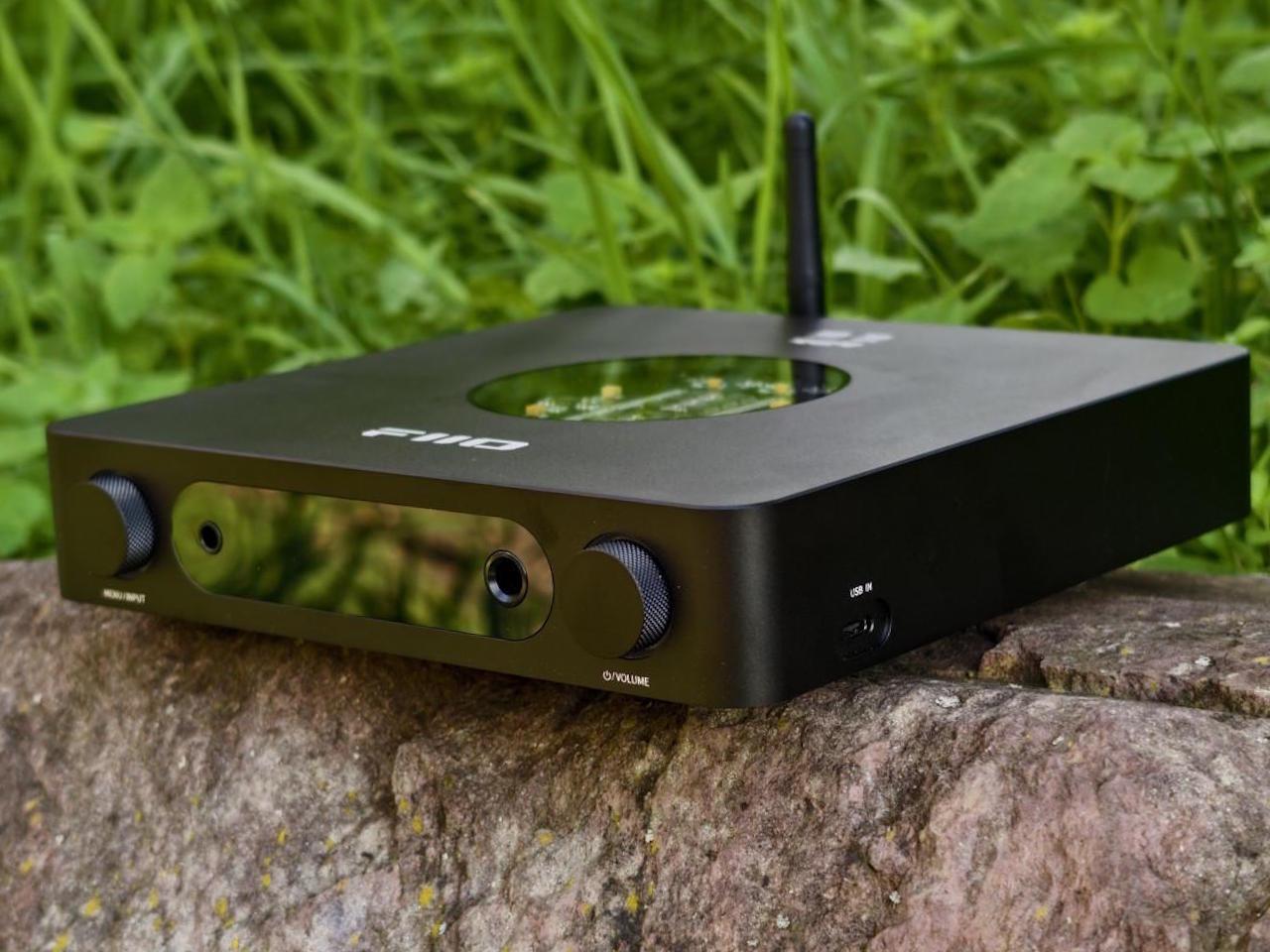
Unlike delta-sigma DACs, which depend on oversampling and noise shaping, R-2R ladders convert digital signals directly into analog voltage through a network of resistors. The trade-offs involve complexity, cost, and sensitivity to resistor matching and thermal stability. However, when executed well, the sonic benefits are significant: low distortion, excellent linearity, and a sound many describe as richer or more organic.
How the K13 R2R’s DAC Architecture Works
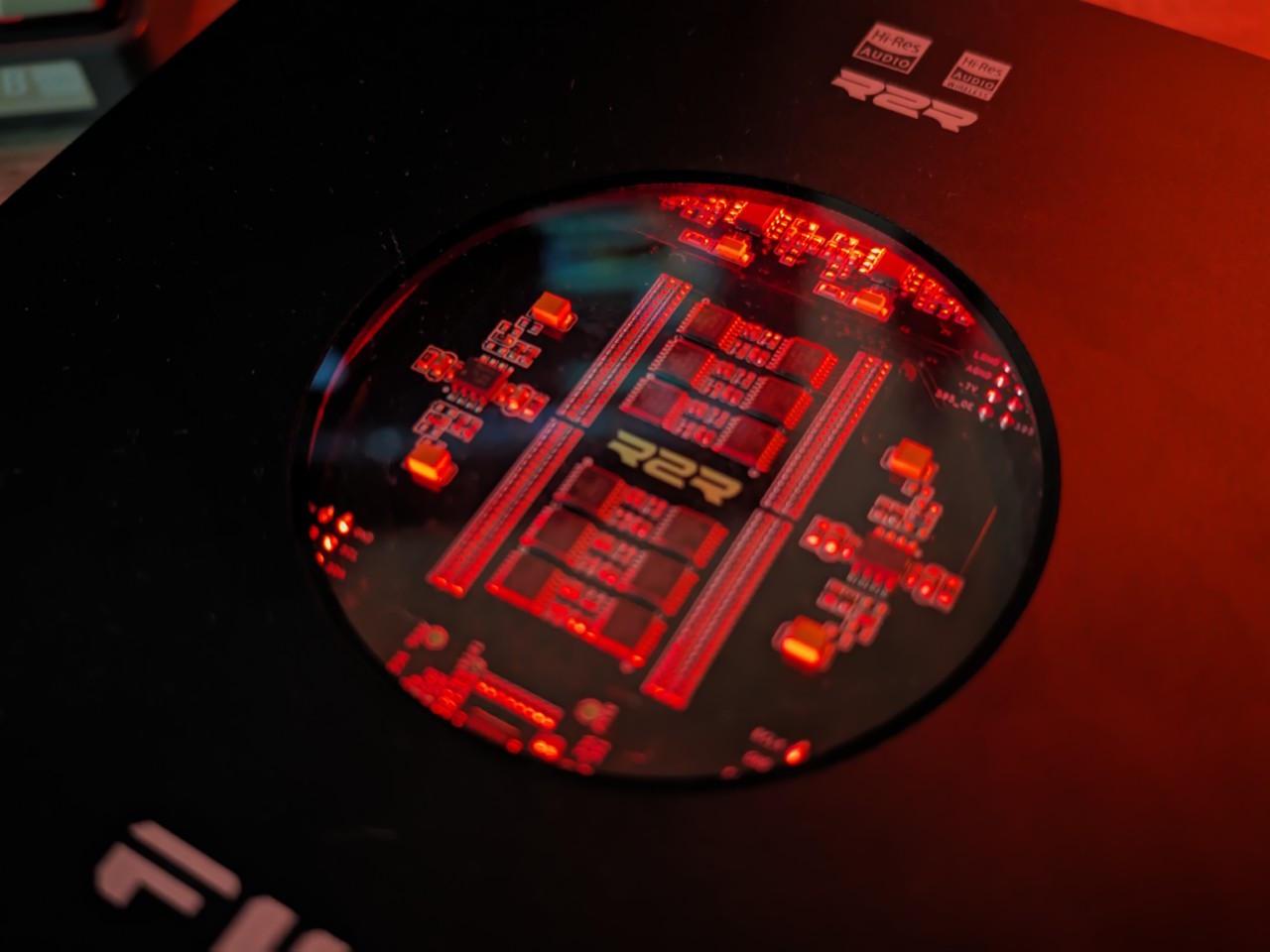
The K13 R2R uses a four-channel, fully differential 24-bit resistor-ladder (R-2R) DAC. Each channel has 48 precision thin-film resistors, resulting in a total of 192 resistors across the unit, all matched and temperature-stable. This ladder network is central to its conversion accuracy and sonic qualities.
-
Precision Resistive Ladder: The resistors are specified to 0.1% tolerance, with very low temperature drift. This precision ensures that each bit contributes correctly, minimizing mismatch errors and distortion.
-
Fully Differential Design: The DAC architecture is fully balanced: each channel is differential, and this reduces common-mode noise and distortion. The result is a very “clean” analog output with minimal artifacts like harmonic distortion or FFT spurs.
-
NOS vs OS Modes: The K13 R2R allows the user to switch between NOS (Non-Oversampling) mode—which plays the audio at its native sampling rate—and OS (Oversampling) mode, which upsamples the signal (to 384 kHz in FiiO’s implementation). NOS mode tends to deliver a more natural, analog-like feel, while OS mode provides more clarity, extended treble, and perhaps a more modern “hi-res” presentation.
-
Digital Processing & Clocking: The unit uses an FPGA + DSP system to manage the conversion, oversampling, and clocking. This system corrects for resistor tolerances, handles digital filters, and ensures accurate timing.
-
Power Supply & Amplification: The K13 R2R has a strong multi-rail power supply, combining a shielded switching supply with a large number of low-noise LDO regulators. Its output stage uses high-quality op-amps (e.g., OPA1642 and TPA6120A) to deliver very high power to headphones, even to demanding ones, while maintaining low distortion.
K13 R2R vs K11 R2R
The K13 retains the same core ladder DAC design but improves in power output, build quality, control, and usability. Users upgrading from the K11 will notice better drive capability and functionality.
The K13 R2R is the more advanced successor: it retains the same core R-2R DAC architecture but upgrades power, build, interface, and features significantly.
If you already have a K11 R2R and drive only efficient headphones, the upgrade to K13 may or may not be justified, depending on how much you care about extra power or the EQ. On the other hand, if you are building or upgrading a desktop setup now, the K13 R2R offers more flexibility, performance, and future capability.
Specs
- DAC Architecture: 24-bit R2R resistor ladder (192 precision resistors)
- Amplifier: Dual OPA1642 + Dual TPA6120A2 (fully balanced)
- Output Power: 2400mW + 2400mW @ 32Ω (BAL), 600mW @ 32Ω (SE)
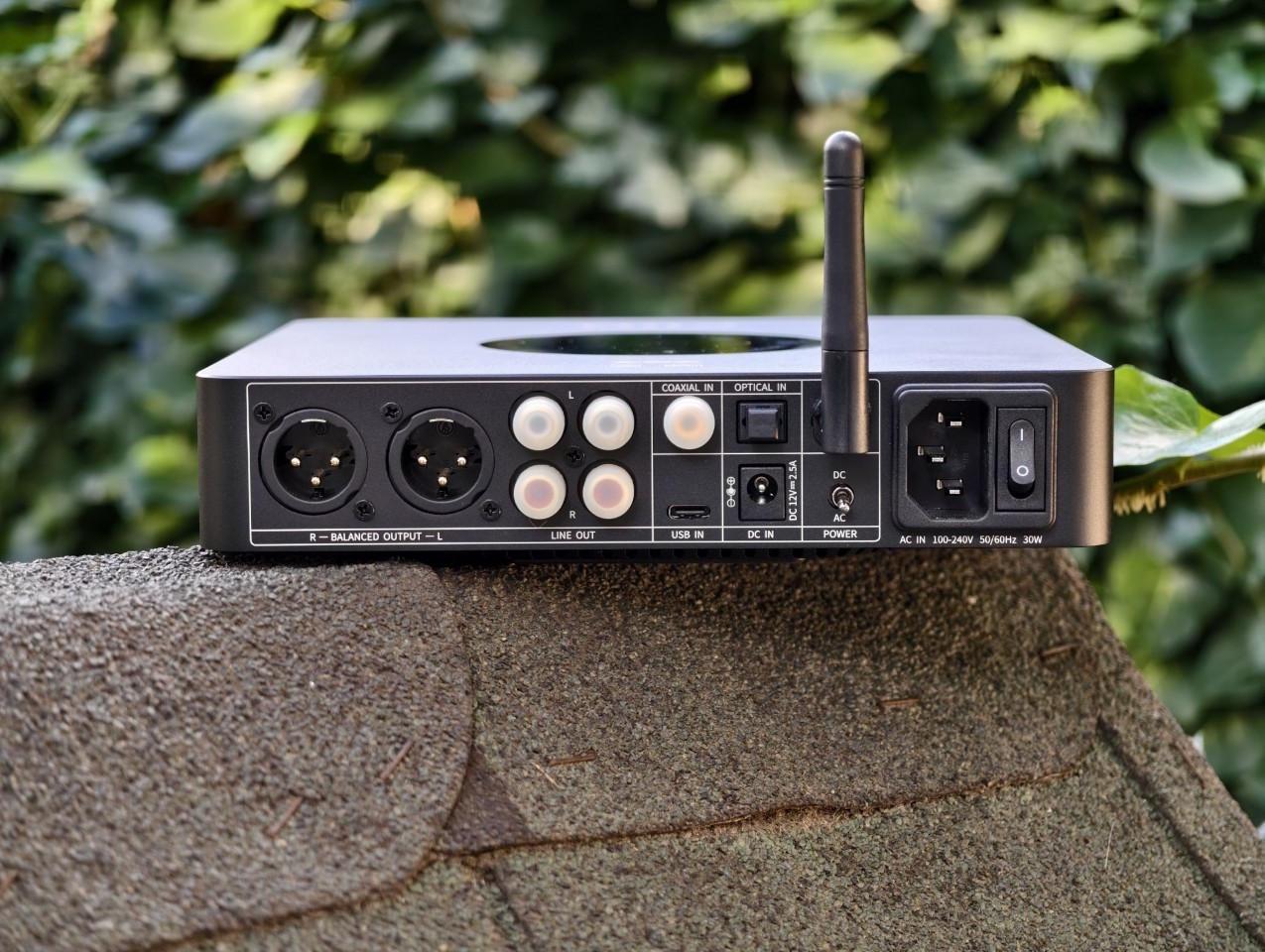
- Input(s): USB-C (x2), Coaxial, Optical, Bluetooth 5.4
- Output(s): 6.35mm SE, 4.4mm BAL, RCA (variable/fixed), XLR BAL
- USB Playback: 384kHz/32-bit PCM, DSD256
- Bluetooth: LDAC, AAC, SBC
- Power Supply: Internal 30W switching PSU, optional external DC input
- Price: $295
In The Box
Disclaimer: The K13 R2R was kindly provided by FiiO for review.
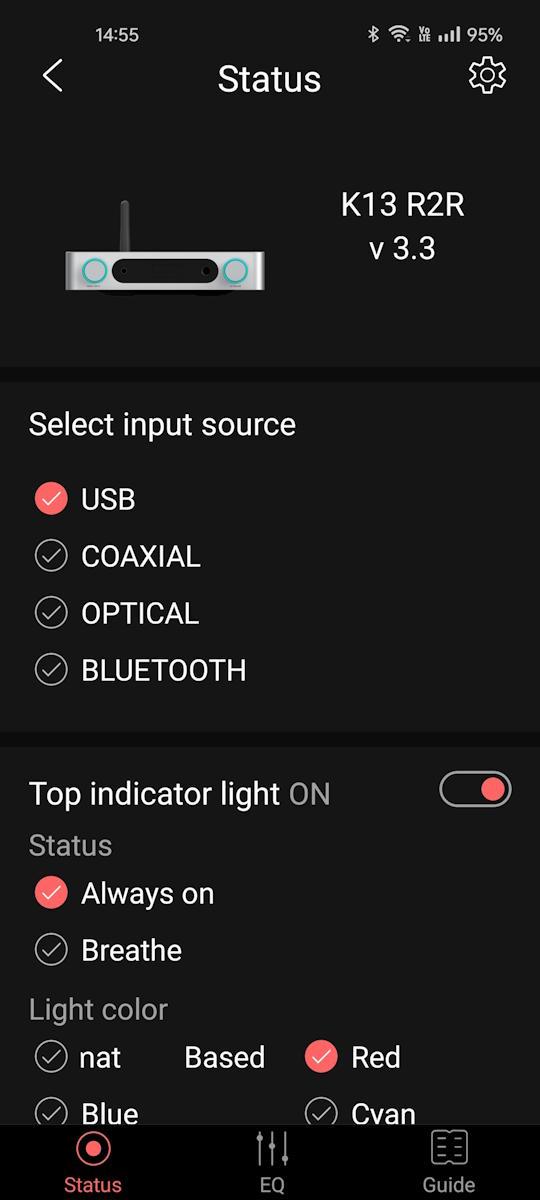
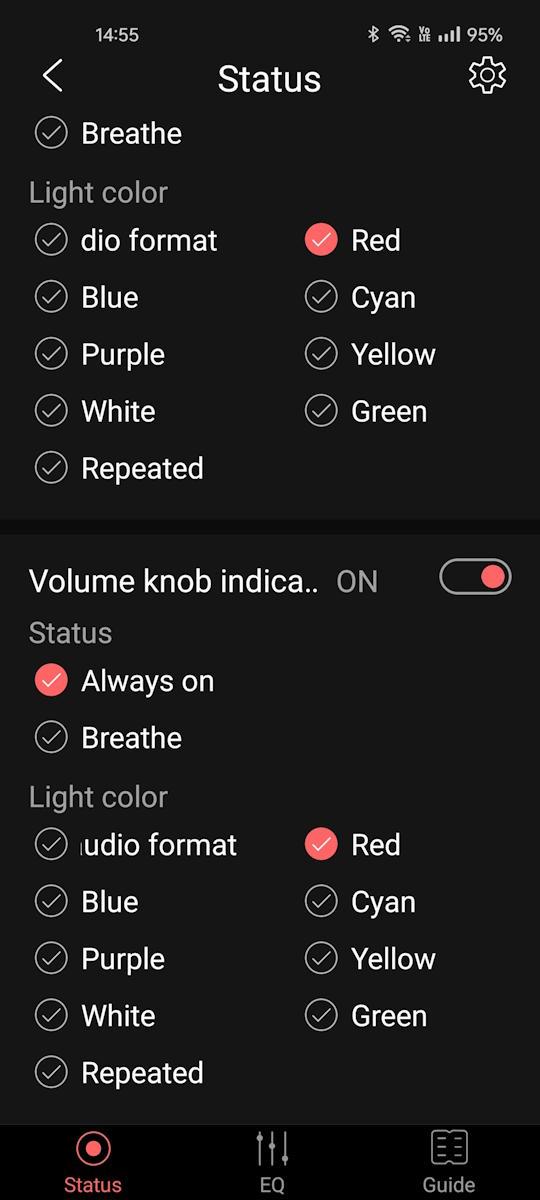
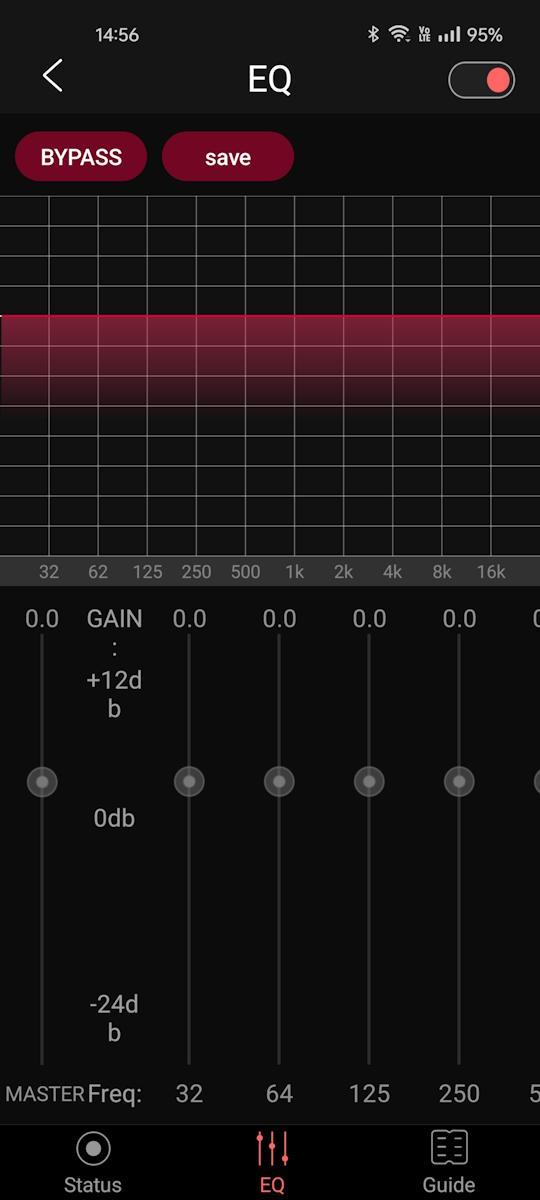
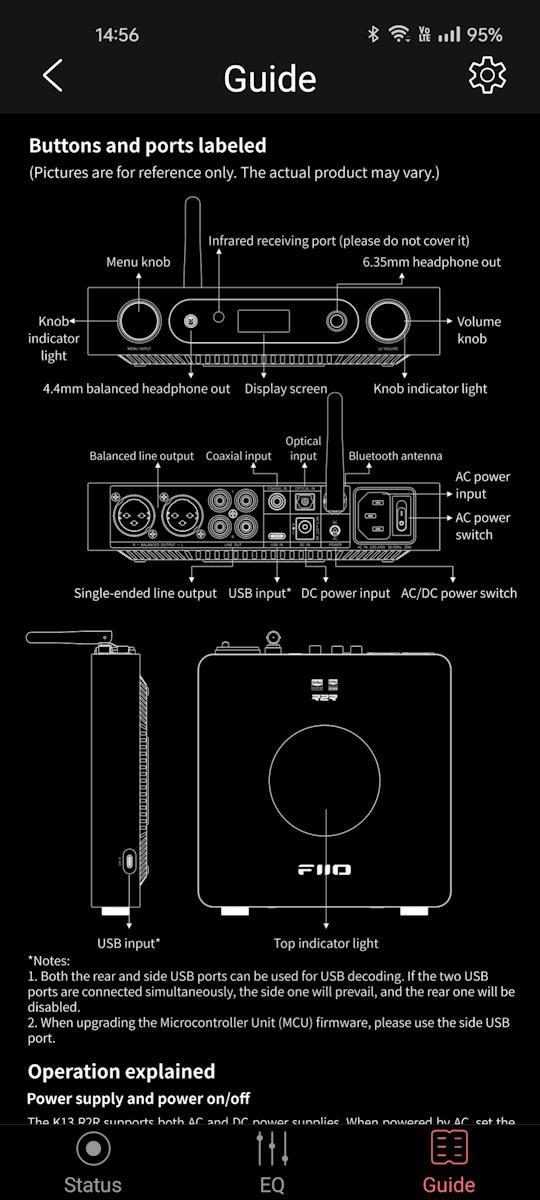
FiiO APP
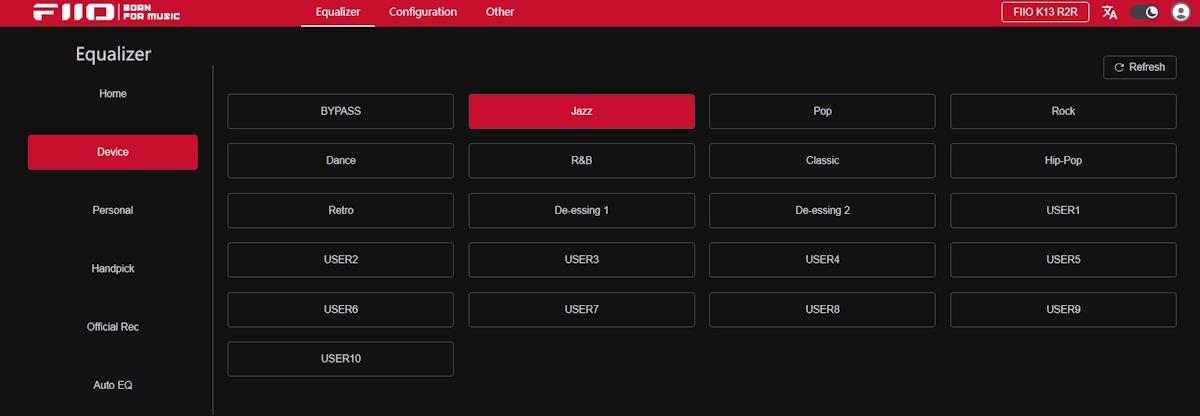
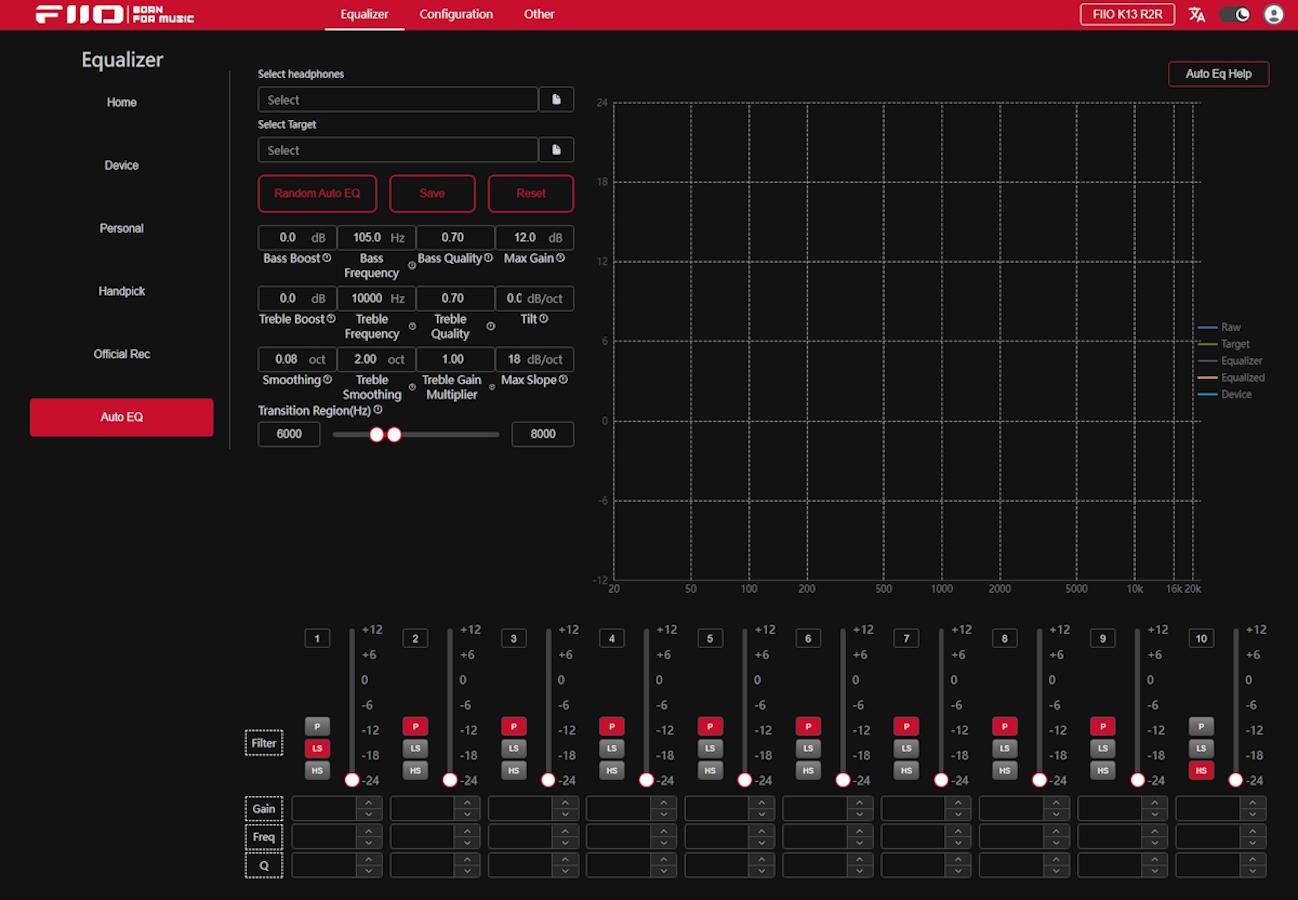
Web Control
Sound
Bass
The bass of the K13 R2R is one of its more distinctive attributes. Because of the resistor-ladder design, low frequencies feel rich and textured, not overly aggressive but deeply present. Sub-bass reaches down with weight and extension; the sense of “rumble” is natural rather than exaggerated. When listening to tracks with heavy bass content or synthesized low frequencies, the unit provides a good foundation without flabbiness.
Mid-bass is slightly warm, which contributes to a sense of fullness in rhythm instruments. Kick drums have good body, and bass guitars come across with harmonic richness. The presentation in the bass region is not purely neutral: the tuning leans toward musical engagement rather than analytical thinness. That said, the control is strong, and bass decay remains clean thanks to the precision of the ladder design.
Mids
In the midrange, the K13 R2R presents a clean, organic, and slightly warm character. Vocals—both male and female—are rendered with authority and natural weight. Male voices have a strong chest presence, and female vocals remain smooth, without sibilance creeping in. Acoustic instruments like guitars and pianos are delivered with body and realism; strings feel lush, slightly warm, but very well defined.
The upper mids (roughly 2–4 kHz) are handled with restraint. There’s clarity and presence, making voices and lead instruments sound alive, but the tuning does not prioritize sharpness. This makes the midrange enjoyable for long listening: it’s not fatiguing, and the harmonic content feels rich rather than thin. For some very analytical recordings, the slightly warm tilt may mean a few ultra-fine micro-details are not pushed to the forefront. Still, the overall coherence and tonality feel very natural.
Treble
Treble on the K13 R2R is extended and well-controlled. The resistor ladder, combined with FiiO’s digital processing, allows a very smooth high-frequency response. Cymbals, hi-hats, and percussive overtones come through with clarity and shimmer, though without excessive “sparkle.” There’s enough air to give recordings a sense of space and realism, but the top-end is not aggressively bright.
In NOS mode, the treble “relaxes” somewhat, giving a more analog feel with gentle transients; in OS mode, there is more crispness and detail. The result is a versatile treble presentation that suits both sensitive headphones and more revealing ones. Sibilance is limited, and the overall high-frequency tuning prioritizes natural tone over maximum brilliance.
Technical Performance — Dynamics, Imaging, Noise Floor
-
Dynamics: The K13 R2R exhibits very good dynamic range. The transistor amplifier stage combined with the precision resistor ladder allows both micro-dynamics (quiet details) and macro-dynamics (loud peaks) to come through convincingly. Bass transients are tight, and quiet passages retain nuance.
-
Imaging & Soundstage: While the K13 is a closed-chassis desktop DAC/Amp, its soundstage performance is better than average for its form. Instruments are well placed, and layering is credible. The fully differential design supports a stable and clean stereo image, and switching between NOS and OS can slightly alter the perceived stage—NOS often feels a bit more intimate, while OS can give more “breathing room.”
-
Noise Floor & Distortion: The fully differential R-2R architecture and precise resistor matching deliver a low noise floor. Measured values for the K13 indicate very low distortion and a very clean background, which contributes to a “black background” feeling. This means it’s very effective even with sensitive in-ear monitors and demanding open or planar headphones.
Listening by Genre
Here’s how the K13 R2R performs across different musical genres, given its sonic signature and technical capabilities:
Classical / Orchestral
The K13 R2R shines here. Its bass extension gives low strings and timpani real presence, while its midrange delivers natural tonality for woodwinds and brass. The treble articulation supports string overtones and percussion without becoming harsh. The dynamic control ensures that both soft passages and massive symphonic climaxes remain detailed and coherent.
Jazz / Vocal / Acoustic
For jazz and vocal music, the K13 offers warmth, smooth mids, and a comfortable treble. Upright bass sounds well textured, drums are natural, and vocal delivery feels realistic. Acoustic guitar, piano, and other instruments have a weight and resonance that benefit from the ladder architecture: they feel neither thin nor overly colored.
Rock / Pop / Metal
In rhythm-heavy genres, the K13 R2R delivers a satisfying punch. Bass and kick drums are authoritative, and the mid-bass fullness supports energetic track dynamics. Guitars are offered with a good body, and the treble maintains clarity without harsh brightness. In denser or heavier mixes, the K13 provides control rather than aggression, preserving fidelity and avoiding listener fatigue.
Electronic / EDM
With electronic music, the combination of solid sub-bass, precise mids, and controlled treble is advantageous. Synth basses sound rich, sequenced lines remain tight, and ambient textures convey air. In tracks with fast transients and high-frequency percussive elements, the ladder’s clean conversion helps maintain detail and stability.
Gaming / Multimedia
Though not strictly a “gaming DAC,” the K13 can serve very well in a multimedia setup. Its low noise floor, clean amplification, and good power output mean it can drive both IEMs and full-size headphones effectively. The NOS mode’s more natural character can make spatial cues more lifelike, while the OS mode can improve crispness for competitive audio cues.
Long Listening / Streaming
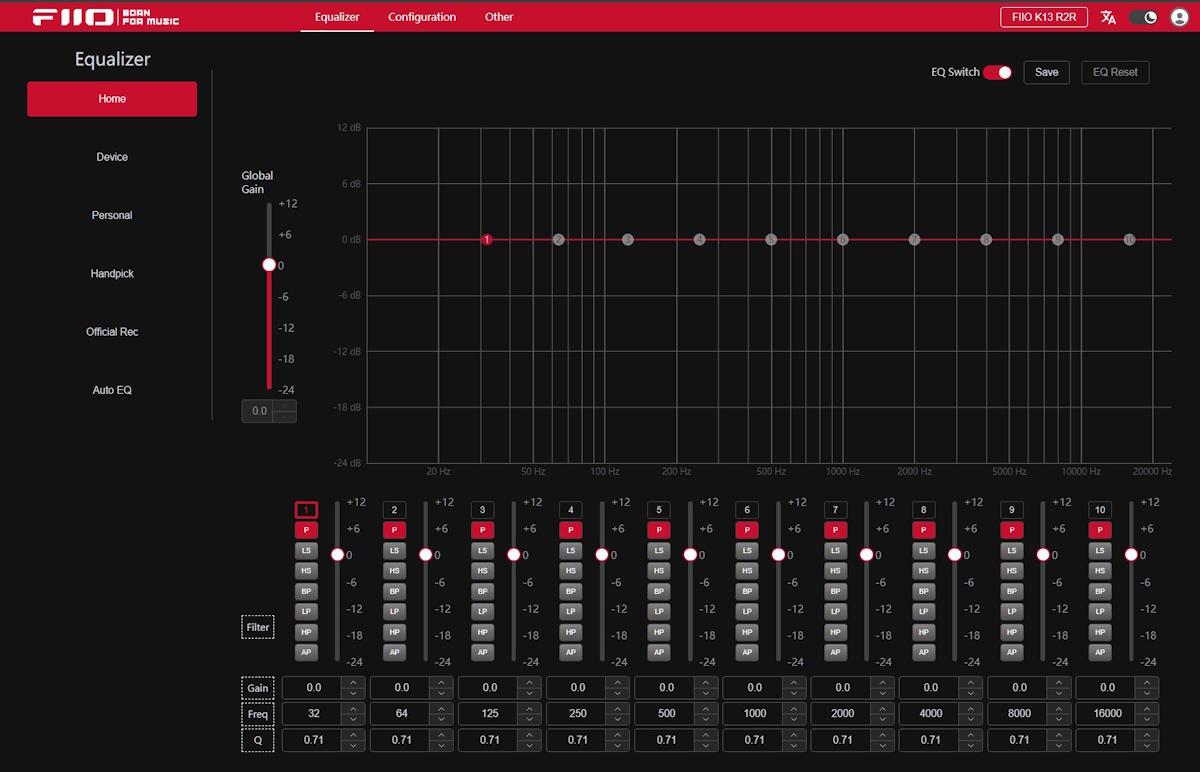
Because of its warm yet accurate tuning, the K13 R2R is well-suited for long sessions. The organic character and low fatigue make it ideal for streaming, movie watching, and regular music listening. The 10-band parametric EQ (via FiiO Control) provides additional customization, allowing listeners to fine-tune the sound for comfort or preference.
Practical Use & Pairing Recommendations
-
Source Pairing: To get the most from the K13 R2R, use a clean USB source (computer or streamer) or a quality DAC input. While it performs well even from moderate devices, better sources will better exploit its ladder DAC’s resolution.
-
Headphone Driving: With its very strong balanced output (~2400 mW into 32Ω), the K13 can drive a wide range of headphones—from very efficient IEMs to high-powered planars. For high-impedance or low-sensitivity headphones, you’ll appreciate the available gain and headroom.
-
Mode Selection: Experiment between NOS and OS: NOS provides a more organic, analog-like flow, while OS delivers more clarity, treble extension, and modern high-resolution polish. Choosing based on your mood, type of music, or headphone pairing makes a notable difference.
-
EQ & Custom Tuning: Use the 10-band PEQ (available through FiiO Control) to adjust tonal balance. Because the base tuning is already quite natural and smooth, EQ can help refine presentation for specific headphones or personal preferences.
-
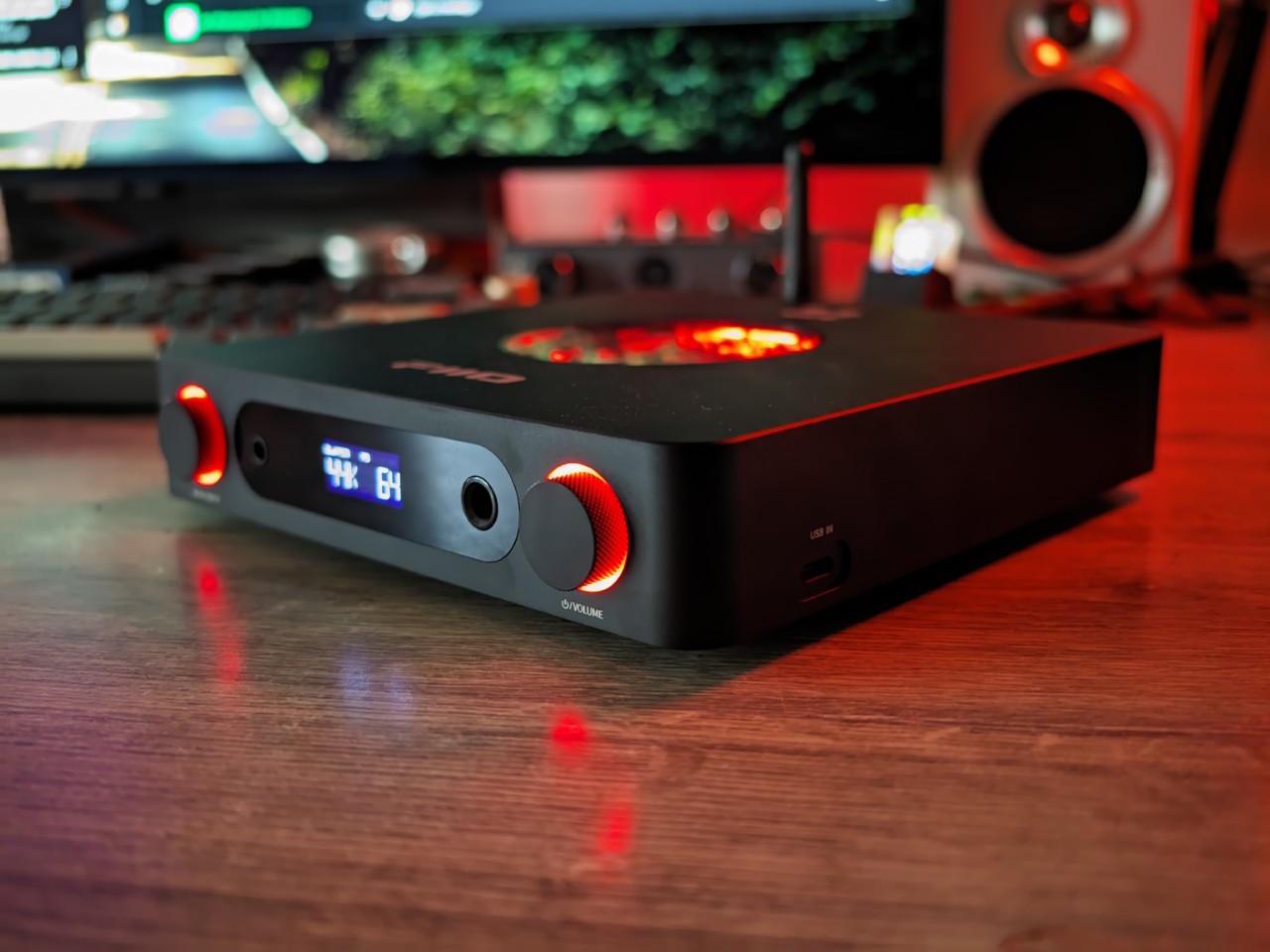
Physical Setup: Given its size (about 210 × 188 × 42 mm) and weight (≈980g), the K13 R2R is best placed on a desk or shelf. Make sure it has good ventilation, especially if using its internal power supply. Use its remote control or knob to switch modes, gain, and inputs.
Sum-Up
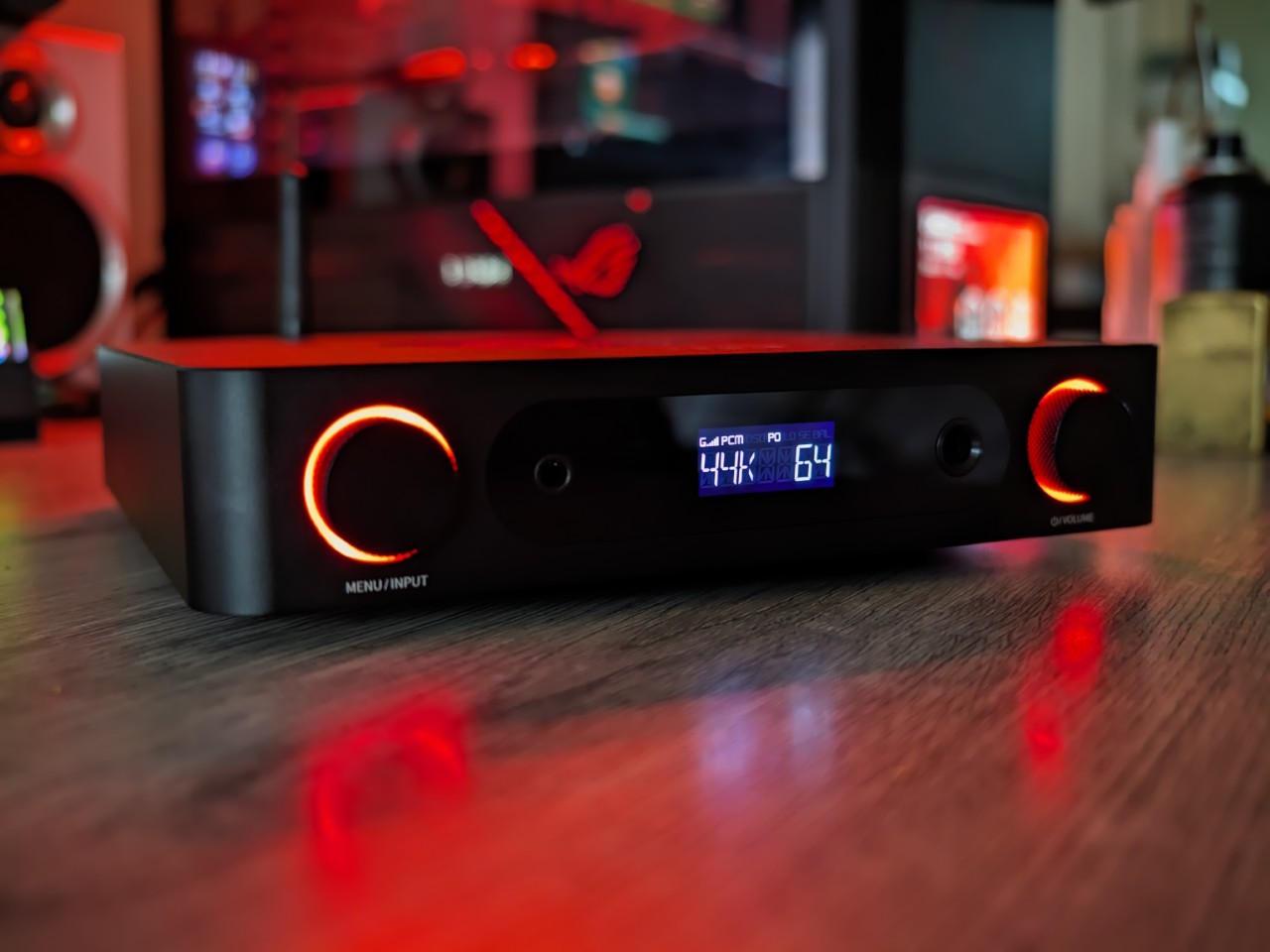
The FiiO K13 R2R is a highly capable and thoughtfully designed desktop DAC/Amp that brings the sonic advantages of resistor-ladder (R-2R) conversion to a practical, accessible, and powerful unit.
The FiiO K13 R2R stands out not only within FiiO’s own lineup (especially compared to the K11 R2R), but also in the wider desktop DAC/amp market. It bridges the gap between value and high-performance ladder architectures by combining a robust resistor-ladder DAC, powerful amplification, modern features (balanced outputs, EQ, multiple inputs), and refined build quality.
For someone considering upgrading from a K11 R2R, the K13 is a logical step — delivering more power, better flexibility, and a more refined interface. For those evaluating other ladder DACs or even delta-sigma units, the K13 offers a unique mix of sonic character and usability that is difficult to match.
On the other hand, to fully benefit from its architecture, one should provide it with a clean source, choose headphones that can take advantage of its power and resolution, and understand that R-2R tuning favors naturalness and musicality over maximum edge or ultra-analytical brightness.
For anyone seeking a “one DAC/Amp to rule many headphones” solution, especially those who value warmth, detail, and high output, the K13 R2R is among the most compelling options available. It’s a demonstration of FiiO’s engineering strength.