
Kiwi Ears AETHER Review – BIG Planar (15.3mm) IEM
Introduction
The Kiwi Ears Aether is distinguished by its large-diameter 15.3mm planar magnetic driver, which is currently the largest available in a planar magnetic in-ear monitor. A multi-layered N52 neodymium magnet array complements this driver. The use of stacked N52 magnets provides the necessary magnetic flux to exceed the performance of smaller 12mm and 14mm planar drivers in terms of sonic clarity and diaphragm control.

The expanded surface area of the driver effectively addresses the inherent low-frequency limitations often found in planar IEMs, resulting in enhanced sub-bass extension and improved mid-bass impact. To accommodate this driver, Kiwi Ears has engineered a correspondingly larger acoustic chamber designed to enhance spatial imaging and broaden the soundstage.

Furthermore, the Aether features an advanced ventilation system designed to replicate the open and airy sound signature of open-back headphones. This design adheres to Kiwi Ears’ signature tuning philosophy, which prioritizes a natural tonal balance and precise timbre to create an engaging and immersive auditory experience.
Design and Aesthetics
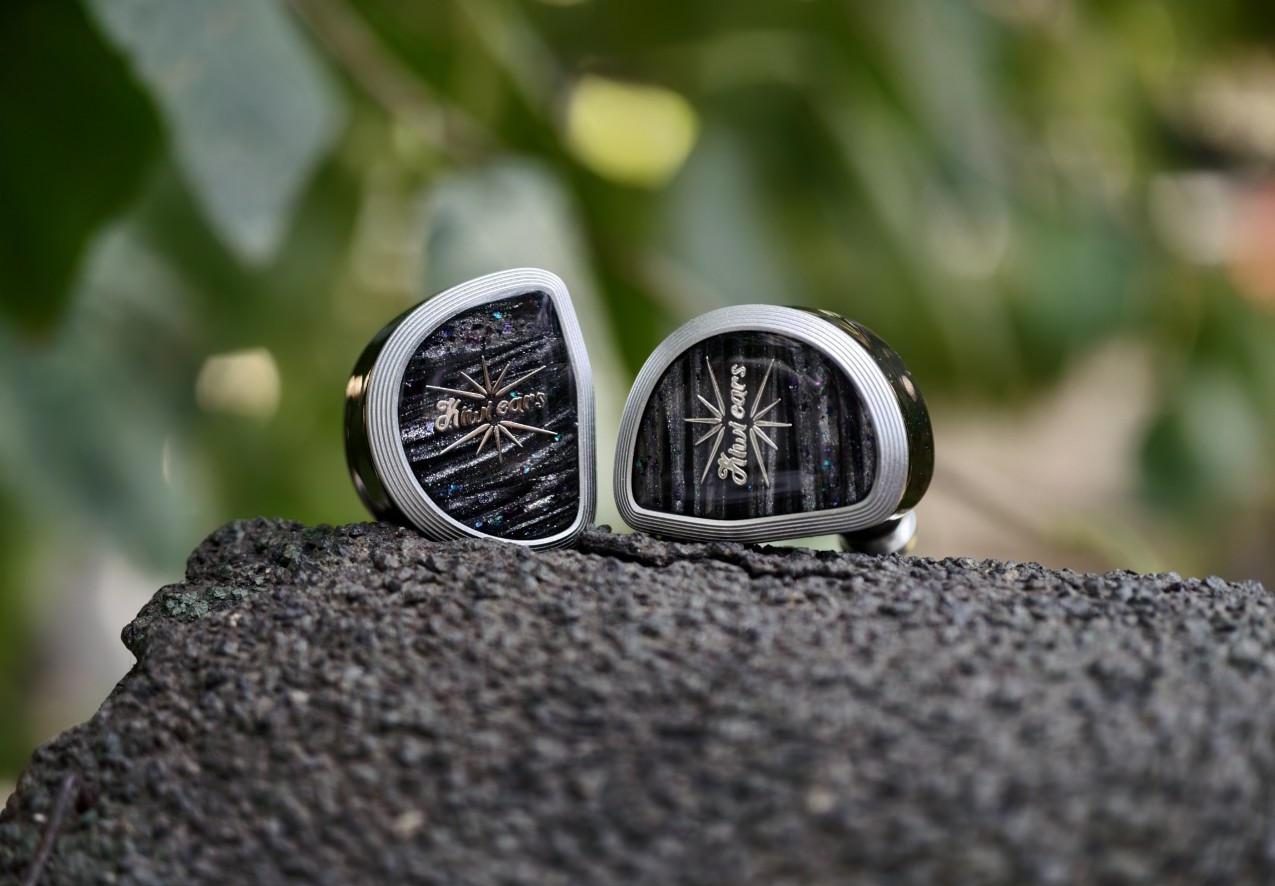
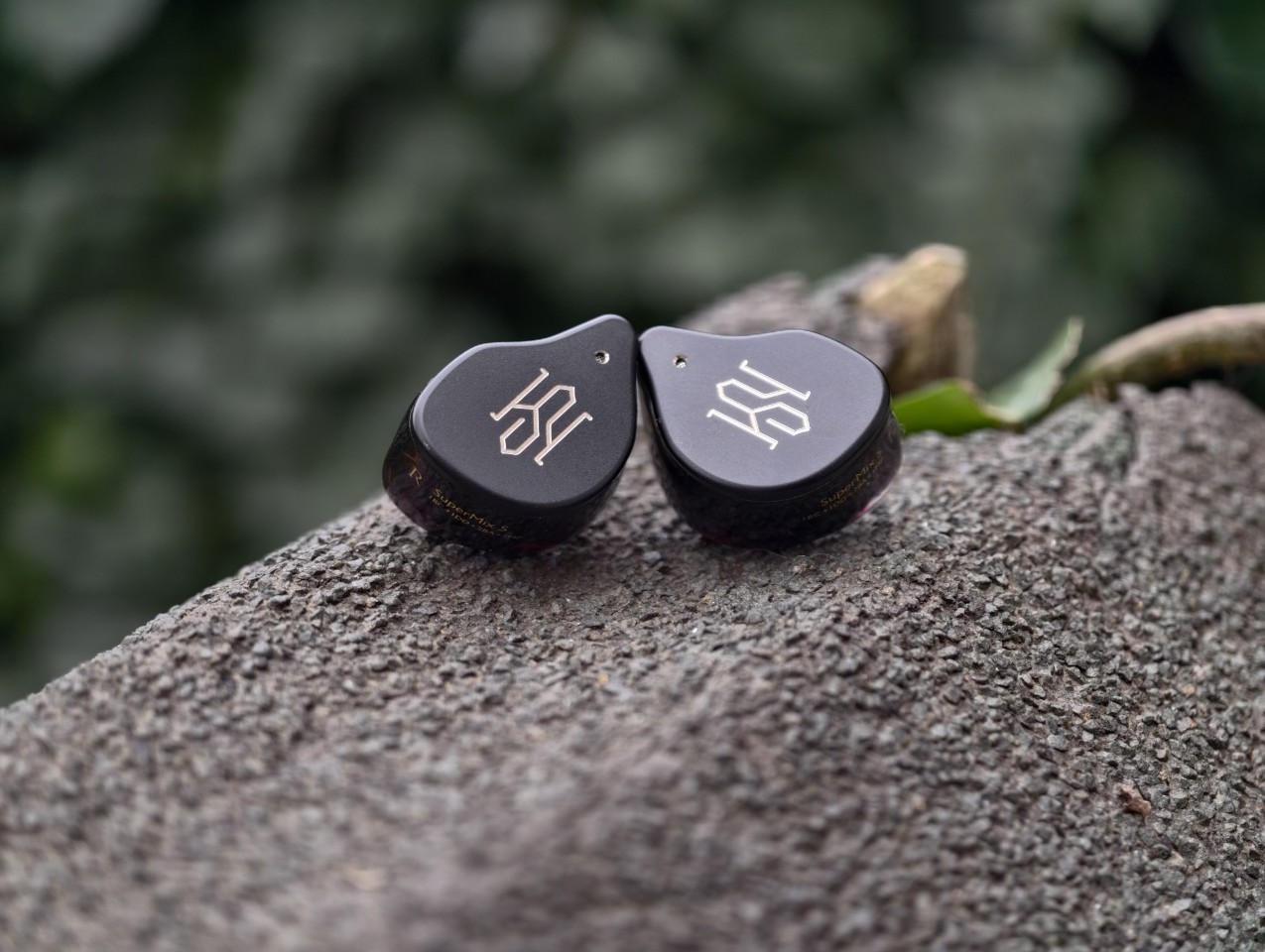
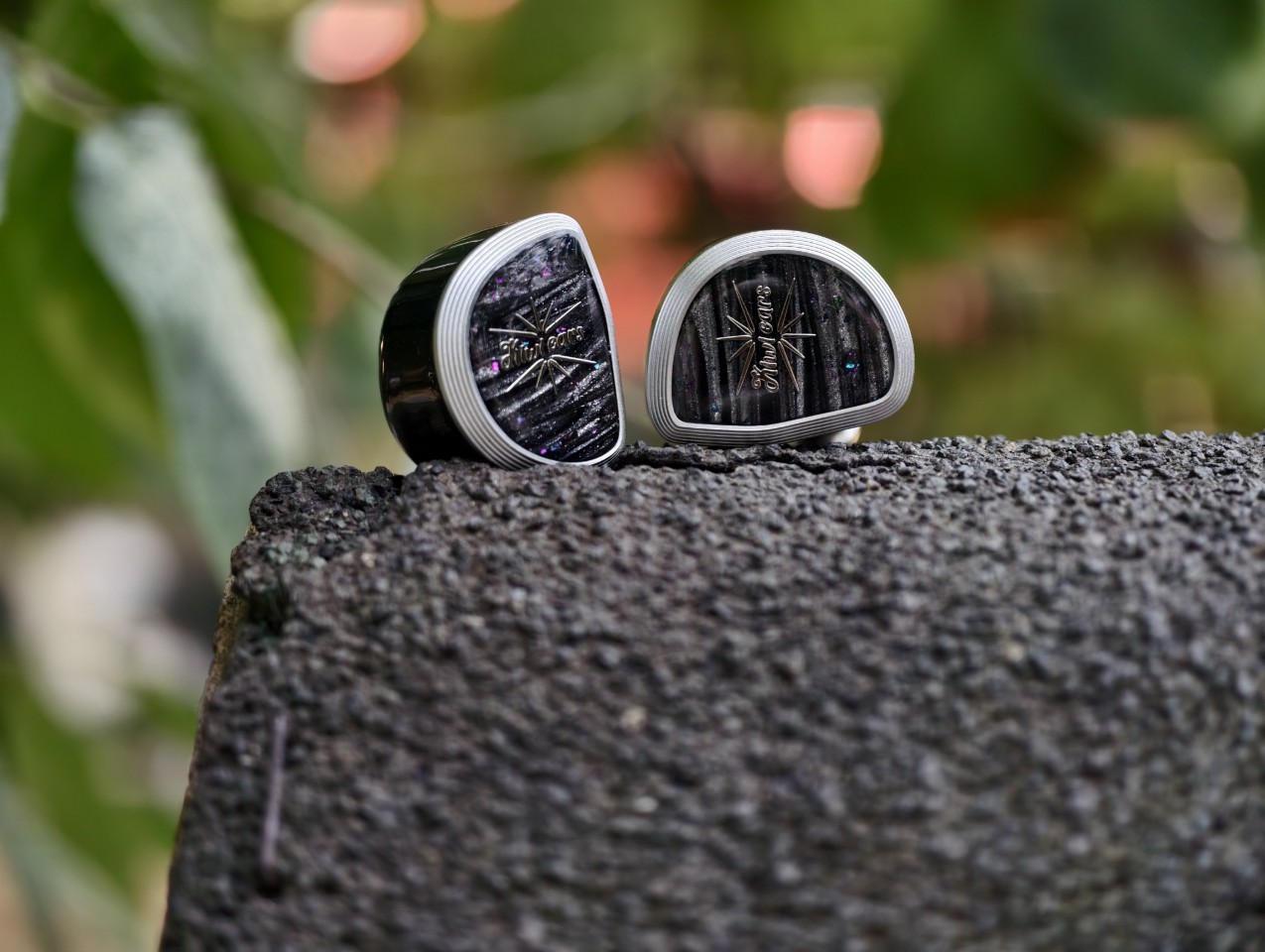
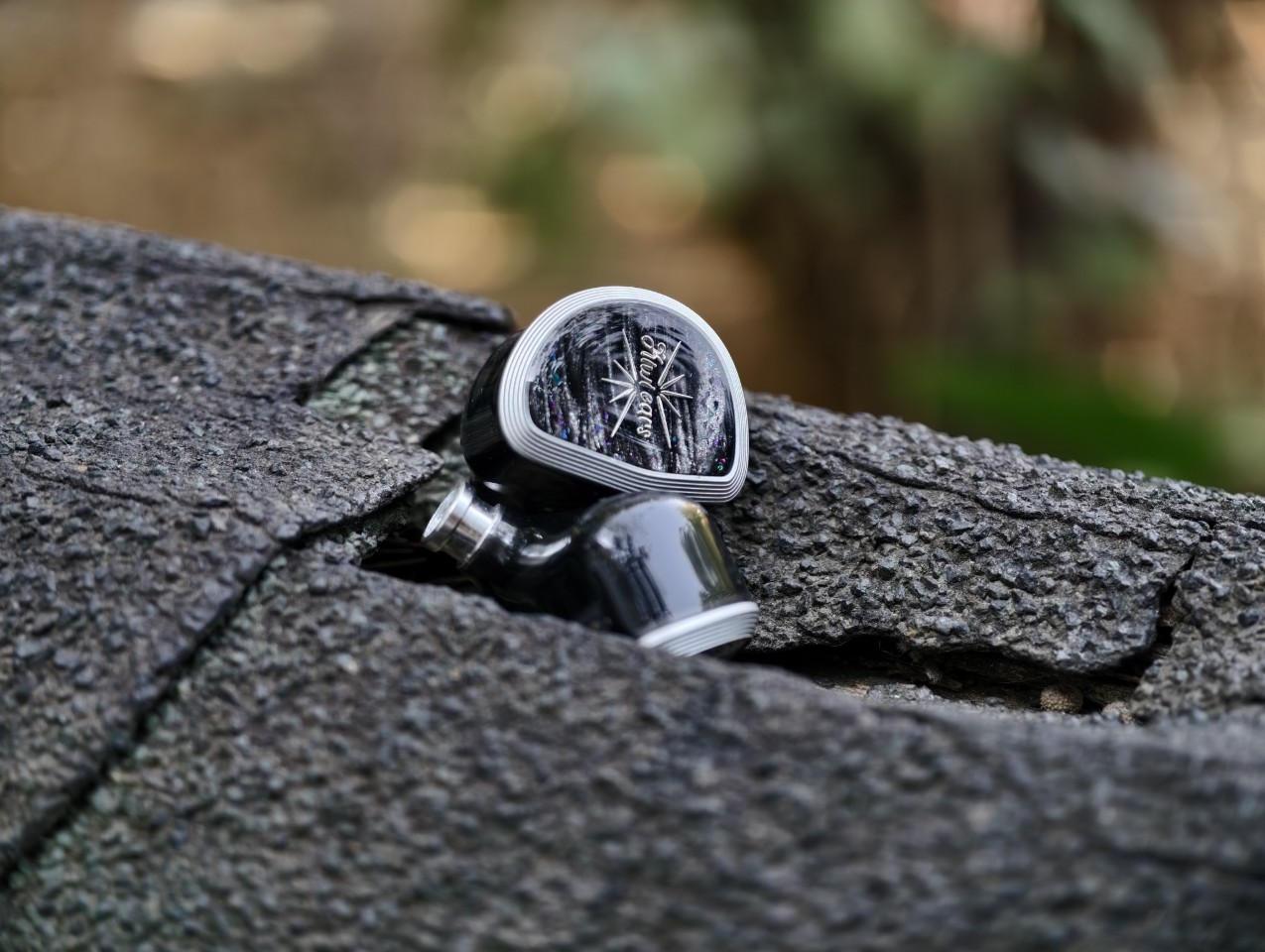
The Kiwi Ears Aether features a polished black acrylic housing, accented by a silver, textured frame that encircles the faceplate, creating a refined aesthetic. The design philosophy is one of understated elegance; the shells are opaque and devoid of ostentatious embellishments, concealing the substantial 15.3mm planar driver within.

The silver frame, which evokes the aesthetic of a timepiece bezel, lends a sophisticated contrast to the minimalist black housing. The primary visual feature is the faceplate, which is designed to resemble a raw-cut piece of obsidian. Its textured, irregular surface emulates the natural facets of fractured stone.

A silver “Kiwi Ears” logo is centrally positioned over a subtle starburst pattern and encapsulated under a high-gloss acrylic layer. This serves to protect the intricate design while providing a smooth, premium finish. For pressure equalization, three small vents are located adjacent to the 0.78mm 2-pin connectors, with a fourth vent on the inner shell.
Ergonomics and Comfort
While the Kiwi Ears Aether is one of the larger planar IEMs on the market, its ergonomic design ensures a comfortable fit without feeling cumbersome. The smooth, contoured housing facilitates a secure seal, which is crucial for preventing bass leakage and enhancing overall immersion.

The wider shell, however, may pose a challenge for users with smaller ear openings. For individuals with larger ears, the Aether fits comfortably and sits flush without causing pressure points. Extended listening sessions are facilitated by the strategically placed vents that mitigate pressure build-up within the ear canal.
Its lightweight construction also contributes to comfort, as it does not feel heavy on the ear despite its size. The relatively short nozzle allows for a deeper insertion and prevents the housing from protruding excessively. However, its size makes it less suitable for use while resting on one’s side. Passive noise isolation is adequate but not exceptional, as ambient conversations may still be audible.
Technical Specifications
- Driver: 1x 15.3mm Planar Magnetic Driver
- Connector: 0.78mm 2-pin
- Plug: 3.5mm unbalanced
- Frequency Response: 20Hz – 20kHz
- Impedance: 14 Ohms
- Sensitivity: 105dB SPL/mW
- Price: $169.99
Disclaimer: The Kiwi Ears Aether was kindly provided by Kiwi Ears for review.
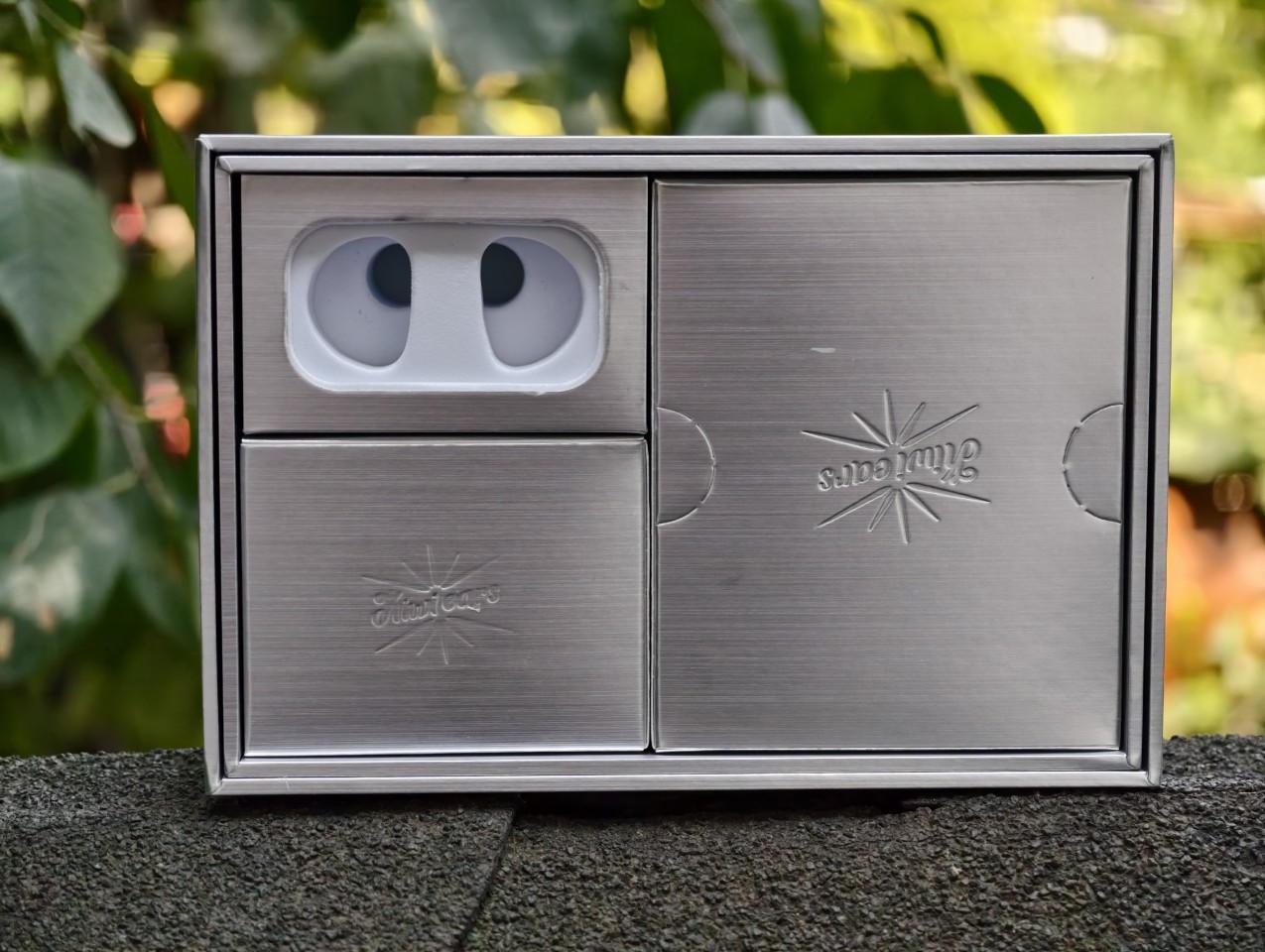
In The Box
Specifications
- Driver Type: One (1x) 15.3mm planar driver
- Plug: 3.5mm unbalanced 0.78mm 2-pin
- Frequency Response: 20Hz – 20kHz
- Impedance: 14-ohms
- Sensitivity: 105dB SPL/mW
- Price: $169.99
Sound
With a sensitivity of 105 dB SPL/mW and an impedance of 14Ω, the Kiwi Ears Aether is easily driven by most source devices. However, its performance scales demonstrably with more powerful amplification. A notable limitation is the inclusion of a stock cable terminated exclusively in a 3.5mm single-ended connector, as the Aether’s sonic potential is more fully realized with a balanced 4.4mm connection.
Optimal sonic performance is typically achieved at listening volumes of 60% or higher. At lower listening levels, the midrange resolution is compromised, resulting in a flatter, less defined sound presentation. Conversely, the bass impact and treble detail remain well-articulated even at reduced volumes.
When driven to higher volumes, the midrange recovers its characteristic clarity and natural tonality, rendering vocals with lifelike refinement. The mid-bass impact is also enhanced, contributing to a more energetic and dynamic presentation without sacrificing control.

Bass
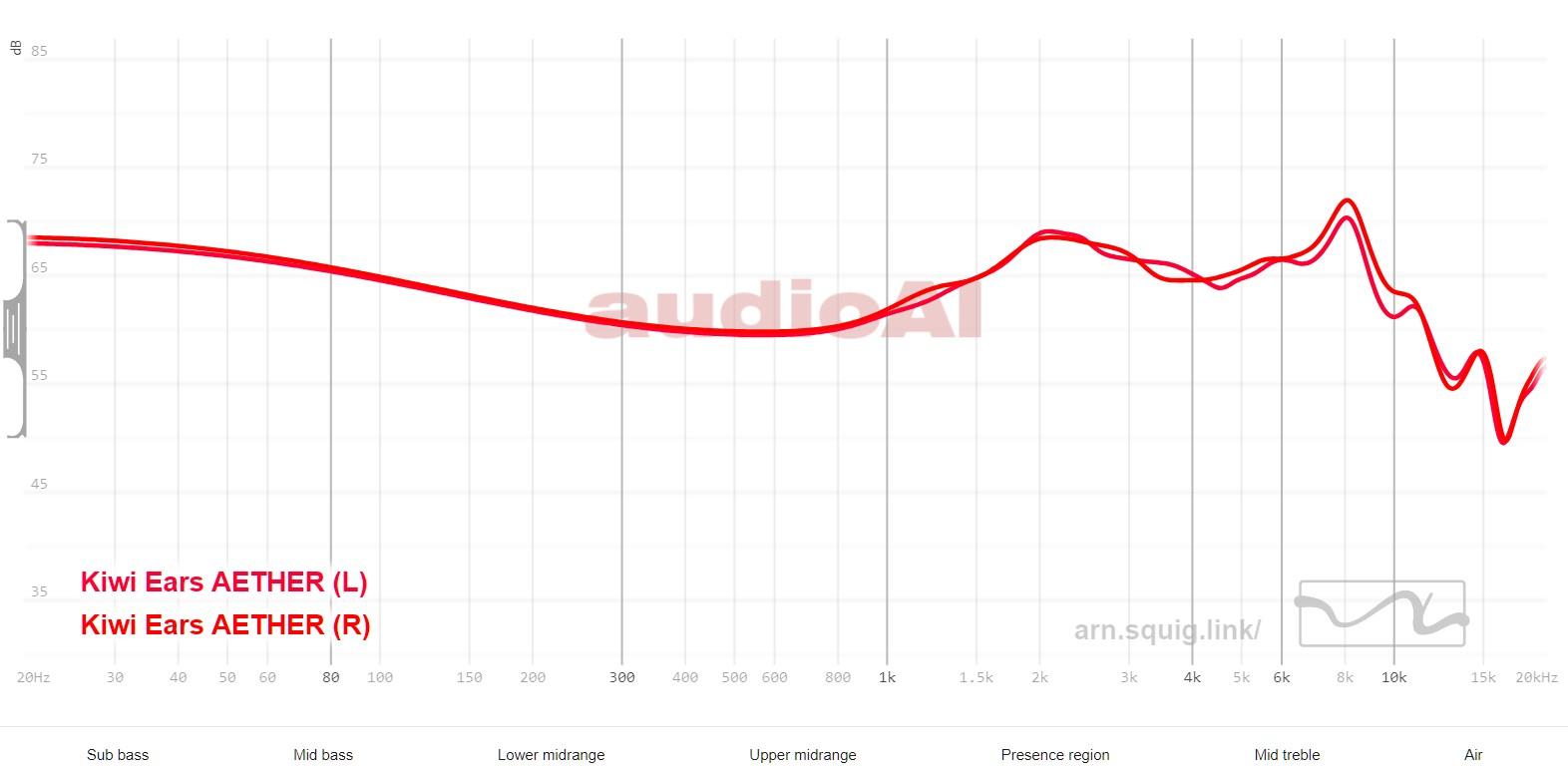
The 15.3mm driver in the Kiwi Ears Aether significantly redefines expectations for bass performance in a planar magnetic IEM. The Aether delivers arguably the most articulate and well-controlled low-frequency response available in its category. It preserves the characteristic speed and transient response of planar drivers while introducing a level of impact and authority not commonly associated with this technology.
The sub-bass extension is palpable and well-defined, adding depth and presence to the music. The mid-bass is rendered with a rhythmic and engaging quality, delivering precise and impactful notes that vitalize the listening experience. The low-end is characterized by its exceptional control, exhibiting no signs of muddiness or bleed into the midrange frequencies.

This clarity is particularly beneficial for instruments like bass guitars, where each note is cleanly articulated with well-defined depth and a natural, realistic tone.
Midrange
The midrange presentation of the Kiwi Ears Aether is commendable, though not without minor imperfections. Vocals can exhibit a slight lack of warmth, occasionally presenting as leaner than ideal; however, this does not significantly detract from the natural timbre. The characteristic “planar timbre” is subtly present, avoiding any metallic or artificial qualities.


Female vocals might benefit from additional body, whereas male vocals are rendered with a more satisfying and balanced weight. The Aether distinguishes itself by avoiding the sharpness or sibilance that can affect other planar IEMs. Vocals are well-positioned within the mix—neither overly forward nor recessed.
A key strength is its note definition, which excels at resolving fine details such as backing vocals and complex instrumental passages. Instruments like guitars and pianos are presented with notable texture and presence, enriching the overall musical experience. The Aether’s tuning leans towards a smooth, musical presentation with a neutral tonal balance, making it a versatile and enjoyable listen.

Treble
While the bass performance is a primary highlight, the treble is also of high quality. It provides the detailed and extended high-frequency response expected from a planar driver, yet it is skillfully tuned to avoid any sharp peaks or sibilance. The treble is characterized by its airy and smooth extension, ensuring a comfortable listening experience even for those sensitive to high frequencies.
Although listening at high volumes may induce some fatigue, at normal levels, the treble maintains a pleasant equilibrium between energy and relaxation. Sibilance is remarkably well-controlled, mirroring the refinement observed in the bass response.

The capacity for detail retrieval is exceptional, effortlessly revealing subtle nuances in the music, such as the pluck of a guitar string or the decay of a cymbal. This refinement is especially apparent in the reproduction of percussion instruments, which retain their natural shimmer and decay without sounding artificially enhanced.
Soundstage & Imaging
The soundstage dimensions are moderate in width and height; however, this is compensated for by exact imaging. The spatial rendering within the available soundscape is highly effective, creating an immersive experience. This results in excellent layering and instrumental separation, ensuring the audio presentation remains clear and uncluttered.
The verticality of the soundstage is somewhat limited, but there is sufficient depth to discern the placement of sounds in the foreground and background. Positional cues and panning effects are rendered with impressive accuracy, which contributes to the “holographic” auditory experience that Kiwi Ears intended to create. The new ventilation system is likely to enhance this precise imaging.
The macrodynamic performance is not a primary strength, as the Aether’s dynamic range is more fully realized with increased amplification and higher listening volumes. This is most evident in the midrange, where higher volumes elicit a noticeable improvement in presence and definition.

Sum-Up
The Kiwi Ears Aether establishes a new performance standard for competitively priced, single-driver planar magnetic IEMs. It is distinguished by its exceptional bass performance, refined midrange, smooth treble, and precise imaging, which collectively create a natural and immersive listening experience that is free from sonic harshness and listening fatigue.
While its physical dimensions and included accessories may not suit all users, its outstanding bass control, musical tonality, and realistic timbre are compelling attributes. For listeners seeking an all-rounder IEM with the sound of planar technology, the Aether represents a highly recommended option for just $169.